
Why Choose Suede Over Leather for Trekking Boots

Last Updated: November 20, 2026
Quick Summary
Suede is the better choice when you want a boot that is lighter, more flexible and comfortable from the first wear, rather than maximum toughness. Its soft, breathable upper suits mixed ground and walkers who will keep up with brushing and proofing. The phrase why choose suede over leather for trekking boots comes down to trade-offs: suede gives comfort and softness, while full-grain leather gives durability and lower maintenance.
- Suede is generally more flexible, so there is less resistance over roots and rocks.
- Suede uppers can be made lighter for the same strength, though sole and construction also affect weight.
- Untreated suede is not waterproof; the lining provides the waterproofing barrier.
- Full-grain leather is more durable on rocky ground, while suede needs more regular maintenance.
- Brush suede after walks and reapply protective spray when water stops beading.
Table of Contents
- Why Suede Gets Chosen for Trekking Boots
- Suede vs Full-Grain Leather Hiking Boots: Weight, Flexibility and Comfort
- Breathability and Moisture Management on the Trail
- Are Suede Boots Waterproof? How Treated Suede Performs in Wet Conditions
- Durability and Abrasion Resistance Compared
- How to Care for Suede Hiking Boots
- Suede vs Nubuck Hiking Boots: What the Difference Means
- Choosing Suede by Terrain and Trip Length
- Your Next Step: Choosing the Right Trekking Boot for Your Trips
- Frequently Asked Questions
Why Suede Gets Chosen for Trekking Boots
If you are shopping for a trekking boot, you have probably been told that full-grain leather is the gold standard, but many walkers still ask why choose suede over leather for trekking boots. Suede tells a different story. At Field & Moor, we have built our Harrier range in tan leather and Felefrio suede combinations, and we see the same question come up again and again: why choose suede over leather for trekking boots? The short answer is that suede gives you a lighter, more breathable upper that breaks in quickly, while full-grain leather trades those qualities for toughness and long-term protection. The right choice depends on where you walk and how long you walk for.
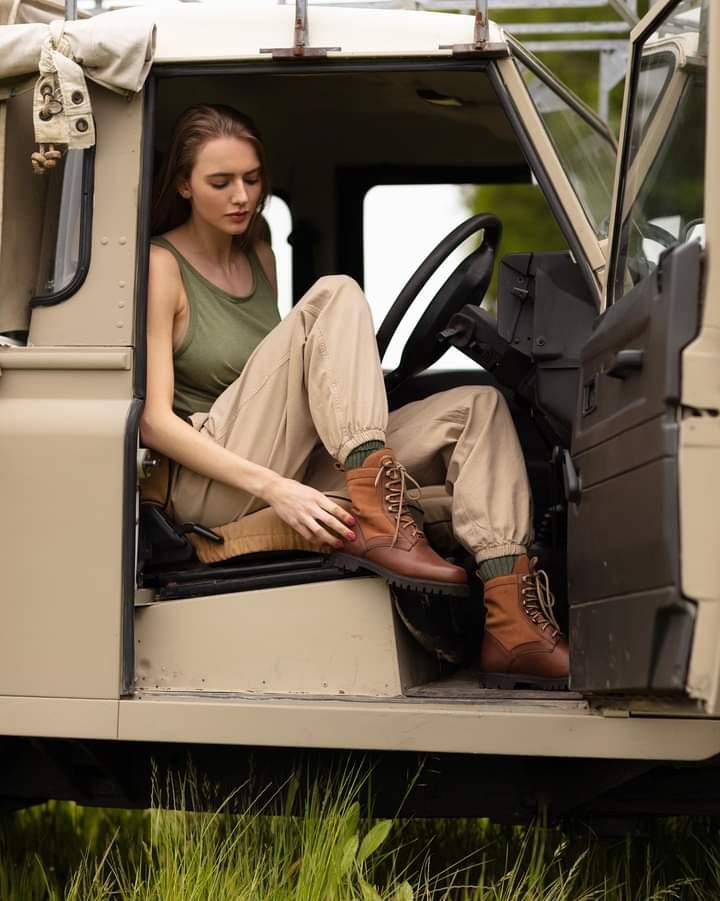
Suede is leather that has been sanded on the flesh side, which gives it a soft, napped surface. That softness is the main reason trekkers reach for it. A suede upper bends easily from the first wear, so you spend less time fighting stiff panels on the first few outings.
Suede also has a particular look, and that matters too. Fieldsports enthusiasts, safari travellers and 4x4 owners often want a boot that works on rough ground and still looks right in town. A suede-and-leather combination lets you have both. Our Harrier boots pair a thick grain leather with suede panels, so the upper keeps its structure while the softer material handles movement and comfort. Keep reading to see how suede compares on weight, breathability, wet weather and care, so you can judge whether it suits your next trip.
Suede vs Full-Grain Leather Hiking Boots: Weight, Flexibility and Comfort
Suede and full-grain leather differ most in how they feel on the foot. Suede is generally more flexible, which means less resistance when you lift your foot over roots and rocks. Full-grain leather has a tighter fibre structure and holds its shape more firmly, which gives support but can feel heavier and slower to soften.
Weight is a more nuanced comparison. A boot's weight depends on the sole, the lining and the construction as much as the upper. In general, suede uppers can be made lighter because the material is thinner for the same strength, but a boot built with a heavy lug sole will still feel substantial. When you compare two boots, look at the full specification rather than assuming suede is always the lighter option.
Comfort from the first wear is where suede often wins. Our Harrier boots use a full leather insole with a cork infill, which helps them feel settled in both hot and cold conditions.
A practical test is to wear each boot around the house for an hour before committing to a long walk. Pay attention to heel slip, toe room on descents and any pressure points across the top of the foot.
The article compares the two materials on the points that matter most on the trail.
| Factor | Suede | Full-grain leather |
|---|---|---|
| Flexibility | More flexible, less resistance over roots and rocks | Tighter fibre structure, holds shape firmly |
| Weight | Can be lighter for the same strength | Can feel heavier and slower to soften |
| Comfort from first wear | Often settles in quickly | Can take longer to soften |
| Support | Gives comfort and movement | Gives more structure and support |
Breathability and Moisture Management on the Trail
Breathability decides how comfortable your feet stay over a long day. Suede is a naturally porous material, so it allows some vapour to escape from the upper. That can help on warm, dry days, when a sealed boot would trap sweat and leave your feet clammy.
Breathability is not the same as waterproofing, and this is where many buyers get confused. A boot can breathe well and still let water in through the seams or the surface of the leather. Our Harrier boots feature a Sympatex waterproof and breathable lining, which is designed to let moisture vapour pass out while keeping outside water from coming in. The lining does most of the moisture management work, so the outer suede can stay soft and flexible.
On the trail, sweat builds up fastest on steep climbs and in mild, humid weather. Wear a good trekking sock, keep spare socks in a dry bag, and let your boots air out at lunch if you can. Taking the boots off for ten minutes often does more for foot comfort than any single feature in the boot.
Are Suede Boots Waterproof? How Treated Suede Performs in Wet Conditions
This is the question most buyers ask first, and the honest answer is that suede is not waterproof on its own. Untreated suede is absorbent. It soaks up water, darkens, and can stain if it is left wet. The useful comparison is not 'suede versus leather' in the abstract but how each behaves once treated, how quickly each dries, and where each reaches its limit.
Waterproofing in a trekking boot usually comes from a membrane or lining rather than from the outer leather. In our Harrier boots, a Sympatex waterproof and breathable lining sits inside the upper, so water that soaks the suede still has to get past that barrier before it reaches your foot. That is the key mechanism to understand: the suede is the outer shell, the lining is the barrier, and the treatment on the suede is what protects the shell itself from becoming waterlogged and heavy. A boot with a sound membrane and a poorly treated suede upper will keep your feet dry in drizzle but will gain weight and darken in steady rain; a boot with a well-treated upper and a failed membrane will feel dry on the surface and wet inside. Judge both.
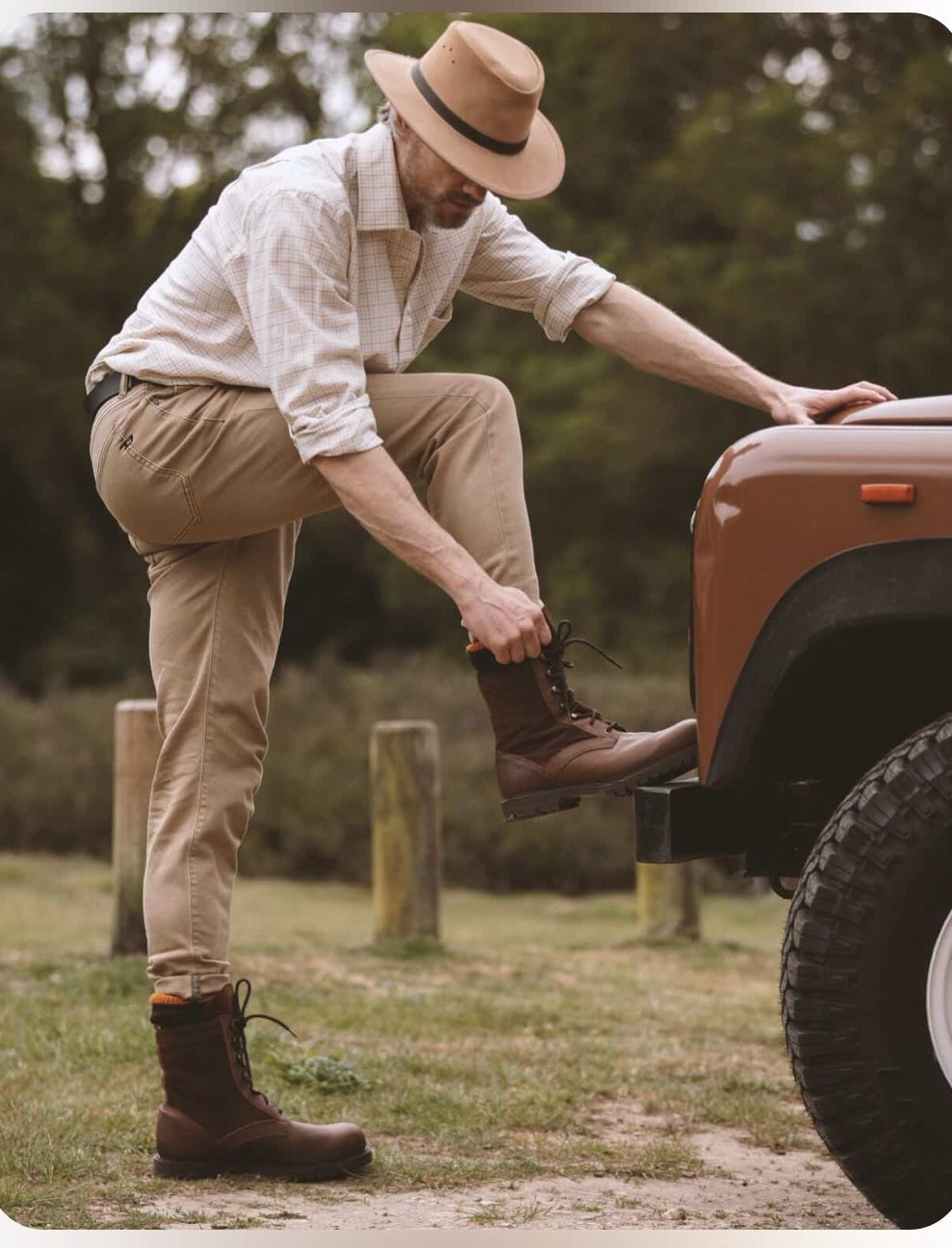
Factory treatment versus aftermarket proofing is where most buying decisions go wrong. Many suede trekking boots arrive with a factory-applied fluorocarbon or wax-based finish that sheds light rain for the first few outings. That finish wears off with abrasion, mud and cleaning, typically within a handful of wet trips depending on use. Aftermarket sprays and waxes top it up, but they are not equivalent: spray-on proofers are easy to apply evenly and suit suede's nap, while waxes and oils can darken the nap, flatten it and reduce breathability if over-applied. A common pattern is to spray a new suede boot before its first wet trip, then reapply when water stops beading on the surface rather than waiting for a fixed interval.
Drying is part of the performance story, not an afterthought. Let wet suede boots dry slowly at room temperature, away from radiators and direct heat, with the footbeds removed and newspaper stuffed inside to draw moisture out and hold shape. Change the newspaper after a few hours on a really wet pair. Never dry suede on a radiator or in front of a fire: the heat stiffens the nap, can crack the leather at flex points and shrinks the upper around the lining. A pair dried too fast will feel tight and look patchy, and no amount of proofing will restore the original finish.
Watch out: reapplying proofer to a damp or dirty boot traps moisture and dirt under the finish, which is worse than leaving it untreated until it is clean and dry.
Treatment matters too. Apply a suitable protective spray before wet trips and reapply it as the surface starts to look dull or darker in patches. Because suede is more absorbent than smooth leather, it benefits from regular treatment more than full-grain leather does, and the gap between a well-maintained suede boot and a neglected one is wider than the equivalent gap in smooth leather. If you expect to walk in sustained rain regularly, plan for that maintenance rather than assuming the factory finish will last the life of the boot. Regular treatment is especially important when rain or snow is expected, so knowing how to protect suede footwear can help keep its finish from becoming waterlogged.
Durability and Abrasion Resistance Compared
Durability is where full-grain leather has a clear advantage, and it is worth being specific about why. Suede has been sanded on the flesh side, which exposes a looser fibre structure with a raised nap. That nap is what gives suede its softness and flexibility, and it is also what flattens, darkens and abrades with repeated contact. On rocky ground, the difference shows up first at the toe box, the outer heel and the flex creases across the forefoot, where suede tends to scuff and pill while full-grain leather burnishes and holds.
That does not mean suede is fragile. A well-made suede boot with sound construction and a rugged sole will last many seasons, and the upper is rarely the first thing to fail. Our boots are Goodyear welted, with treble stitching for strength.
Wear factors matter more than the material label. Repeated wetting and drying cycles are the main enemy of suede: each cycle stiffens the nap slightly and, if the boot is dried too fast, can leave the surface patchy and less supple. Grit trapped in the nap acts like sandpaper against the fibres, so brushing after muddy walks does real durability work, not just cosmetic work. Abrasion from rock scrambling, scree and rough farm work accelerates nap loss, while gentle countryside paths and dry day walks barely touch it. A suede boot used for mixed ground and occasional wet grass will age gracefully; the same boot used for regular scree and sustained rain will look tired sooner, even if the structure underneath is sound.
A maintenance schedule makes the trade-off manageable. After each walk, brush off dry dirt with a suede brush and let the boots air. After a wet trip, dry them slowly as described above, then brush the nap back up once dry. Reapply protective spray when water stops beading, typically every few wet trips rather than on a fixed calendar. For combination boots, condition the smooth leather panels sparingly with mink oil and keep it off the suede, which can darken and lose texture if oiled. Inspect the seams and welt stitching once a season, and have the soles replaced before they wear through to the midsole. That routine is more involved than the occasional wipe a full-grain leather boot needs, and it is the honest cost of choosing suede.
For a clear comparison, consider how you will use the boot. Suede suits walkers who want comfort and flexibility on mixed ground and who accept a little more upkeep. Full-grain leather suits people who expect hard knocks from rock scrambling or rough farm work and who want the most protection with the least maintenance. Neither choice is wrong; the question is whether you will actually do the brushing and proofing that keeps suede in condition, because a neglected suede boot ages faster than a neglected smooth-leather one.
How to Care for Suede Hiking Boots
Caring for suede is simple, but it has to be done regularly. After each wet trip, let the boots dry slowly at room temperature, away from radiators and direct heat, which can crack or stiffen the leather. Stuffing the boots with newspaper helps them keep their shape while they dry.
Once the boots are dry, brush the suede with a suede brush to lift the nap and remove surface dirt. Our Harrier boots come with a horse hair brush. For stains, work gently and avoid soaking the leather. Protective sprays help guard against water and staining, and reapplying them before wet trips keeps the surface in better condition.
Conditioning matters for the leather parts of a combination boot. Mink oil, supplied with our Harrier boots, helps preserve the grain leather over the long term. Use it sparingly on the smooth leather panels only, and keep it off the suede, which can darken and lose its texture if oiled.
Suede vs Nubuck Hiking Boots: What the Difference Means
Suede and nubuck are often confused, and the difference matters when you read product descriptions. Both are leathers with a sanded surface, but suede is made from the flesh side of the hide, while nubuck is made from the outer grain side that has been sanded.
When you compare boots, check whether the product is described as suede, nubuck or a grain leather combination, because the care and durability expectations are not identical.
Our Harrier boots use suede panels combined with grain leather.
Choosing Suede by Terrain and Trip Length
The right boot depends on where you walk. For longer trips across mixed ground, the combination of a Vibram sole, a waterproof lining and a durable upper suits varied terrain. Our Men's Safari, Hiking and Trekking Boot in tan leather and Felefrio suede, priced at £225.00, suits walkers who want that balance.
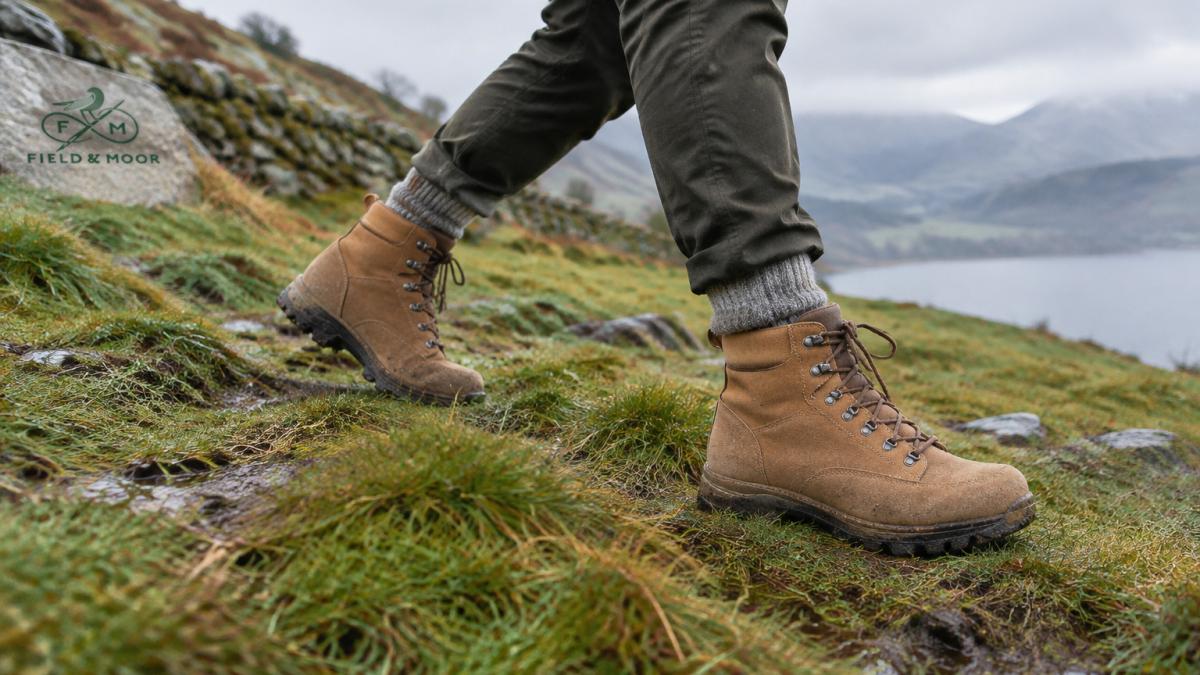
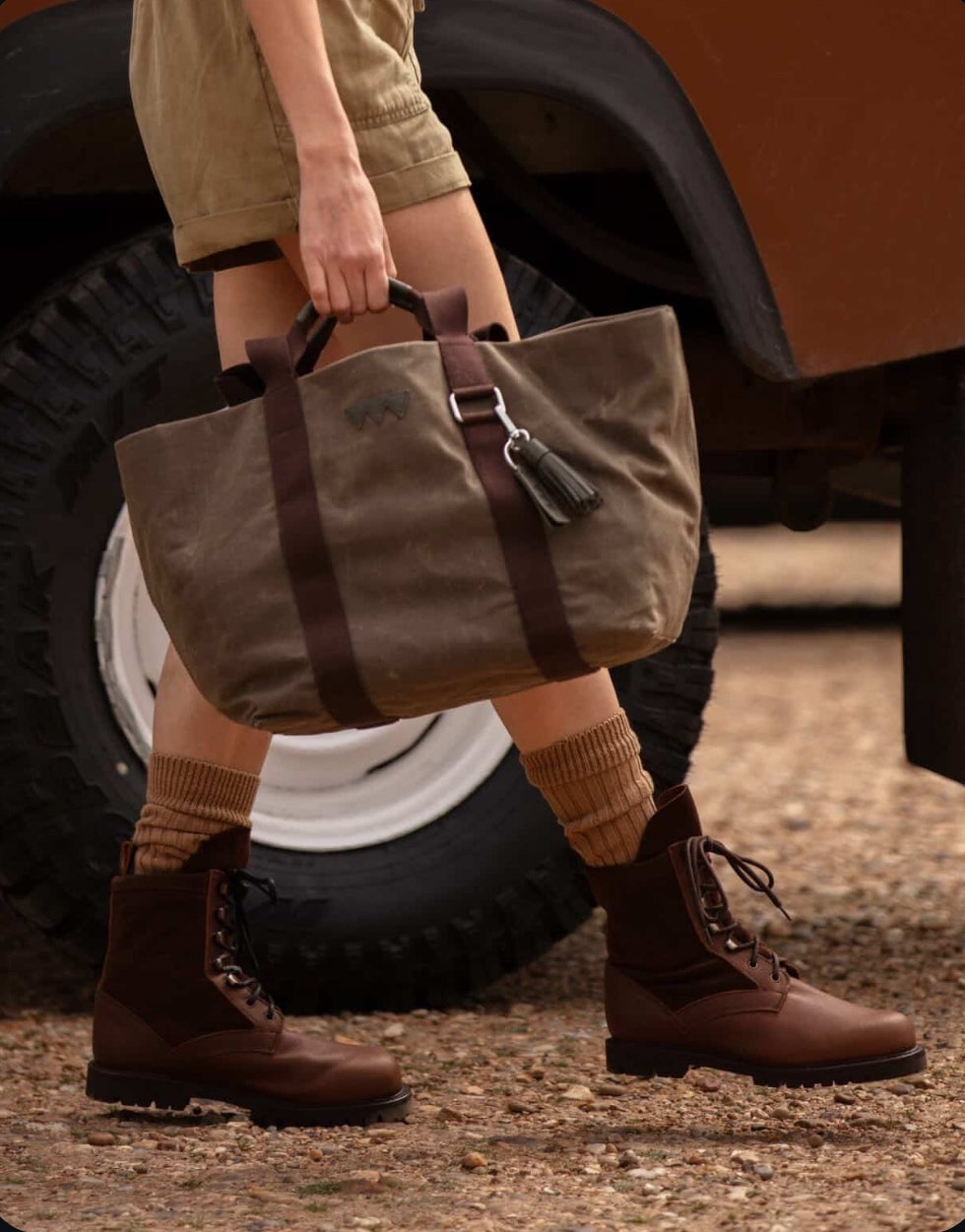
Our Ladies Safari, Hiking and Trekking Boot in the same tan and Felefrio suede combination, at £210.00, is designed with the same construction for women's fit. Fieldsports users and shooters who want a suede look with a strong build may prefer the Harrier safari and trekking boot in chestnut leather and suede combination at £300.00, which includes detachable gun rests.
Trip length matters as much as terrain.
Your Next Step: Choosing the Right Trekking Boot for Your Trips
Suede offers softness, flexibility and comfort from the first wear, while full-grain leather offers greater toughness and longer-term resilience. Neither is better in every situation. Think about the ground you cover, how much rain you expect, and how much care you are willing to give your boots. Then compare the full specification, including the lining, the sole and the construction, rather than the upper material alone.
If you are ready to choose, browse our full range of Field & Moor safari and trekking boots and try the options side by side. Get started with the Harrier range and find a boot that handles your next trip with confidence.
Frequently Asked Questions
Are suede trekking boots good for hiking?
Suede trekking boots suit many hikers, particularly on dry or mixed trails and for trips where light weight and a comfortable break-in matter. Suede is more flexible than full-grain leather and tends to feel comfortable from the first wear. The trade-off is that untreated suede absorbs water and needs more regular care. Boots such as the Field & Moor Harrier in tan leather and Felefrio suede combination, priced at £225.00 for men's and £210.00 for women's, pair a suede upper with a Sympatex waterproof lining and a Vibram sole for grip on rough ground.
Are suede boots waterproof?
Suede is not waterproof in its natural state. Untreated suede absorbs moisture and can stain or darken in wet weather. Waterproofing depends on the lining and on treatment of the upper. Field & Moor's Harrier boots use a Sympatex waterproof and breathable lining, so water is kept out even though the suede outer can still get wet and should be treated with a protective spray. Check the lining specification rather than assuming the suede upper alone keeps water out.
Do suede boots need more care than leather boots?
Yes, suede generally needs more regular care than full-grain leather. Field & Moor's Harrier boots come with horsehair brushes for both leather and suede, plus mink oil for long-term preservation of the leather.
Is nubuck better than suede for hiking boots?
Nubuck and suede are both sanded leathers, but nubuck is made from the outer grain side and is usually more hard-wearing and easier to keep looking tidy. Suede comes from the flesh side, so it is softer and more flexible but more prone to wear and staining.
