
Benefits of Leather Lined Country Boots: A Practical Guide

Quick Summary
Leather lined country boots offer a lining that manages moisture, softens to your foot and wicks sweat away from the skin. They feel more comfortable than many synthetic linings over long days. However, a leather lining does not make a boot waterproof on its own.
- A leather lining moves sweat away from the skin rather than trapping it.
- A leather lining softens with wear and moulds to the shape of your foot.
- Most leather-lined country boots take two to four weeks of regular wear to break in.
- Waterproofing depends on the upper construction and any membrane fitted, so check it separately.
- For constant wet weather, a membrane lining is the more reliable barrier.
Table of Contents
- What a Leather Lining Does That a Leather Upper Cannot
- Comfort, Breathability and Moisture Management
- Leather-Lined vs Waterproof Membrane Boots
- Durability, Warmth and Wet-Weather Performance
- Country Boots for Walking: Fit, Break-In and Blister Prevention
- How to Care for Leather Boots So the Lining Lasts
- Limitations: When a Leather Lining Is Not the Right Choice
- Choosing Your Pair: A Decision Guide by Activity and Weather
- Booking a Fitting and Choosing Your Next Pair
- Frequently Asked Questions
What a Leather Lining Does That a Leather Upper Cannot
Most buyers focus on the outside of a country boot, but the lining decides how the boot feels after six hours on wet ground, and a leather lined country boots design handles that job better than most. A leather lining is the inner layer that touches your foot and sock, and it does a different job from the leather upper. The upper shields you from weather and knocks. The lining manages moisture, shapes comfort, and wicks sweat away from the skin.
That difference matters. A full-grain upper can be thick and rugged, yet a synthetic or plasticky lining can still leave your feet clammy and sore. A leather lining works with your foot rather than against it, which is why many experienced fieldsports users look at the lining first. For a full waterproofing guide to leather country boots, see waterproof leather country boots.
Here is what a leather lining typically does better than an upper alone:
- Moves sweat away from the skin rather than trapping it
- Softens with wear and moulds to the shape of your foot
- Feels cooler against the skin in warm conditions
- Resists odour better than many synthetic alternatives
Leather is a natural material, so it adapts to temperature and humidity. Watch out: a leather lining does not make a boot waterproof on its own. Waterproofing depends on the upper construction and any membrane fitted, so check that separately.
Comfort, Breathability and Moisture Management
Comfort in a country boot is mostly about moisture. When your feet stay dry, blisters, cold toes and that heavy, sodden feeling mostly disappear. Leather handles moisture in two ways. It absorbs some water vapour from your foot, then releases it slowly to the air outside the boot.
Breathability is often misunderstood. No leather boot is fully open to air, but a good leather lining allows vapour to pass through the material rather than building up inside. Synthetic linings can feel dry at first, then turn clammy after a few hours of exertion.
Consider a typical day on a shoot or walk. Your feet produce a significant amount of sweat over several hours. Where that moisture goes determines how you feel by mid-afternoon. A leather lining tends to spread moisture across a wider area, which reduces the hot, wet pockets that cause friction.
For fieldsports and long walks, the practical benefits of leather lined country boots include:
- Fewer damp patches and less sock slippage
- Better temperature control in mild and cool weather
- A more even fit as the lining softens over time
Breathability and waterproofing pull in different directions, which is why a membrane lining is a separate choice. More on that next.
Leather-Lined vs Waterproof Membrane Boots
Two lining types dominate the country boot market: traditional leather and waterproof membranes. Each has a clear place, and choosing well depends on how you use your boots. The useful comparison is not which is 'better' but how each behaves across the measures that matter on a long day: drying time, breathability, warmth, water protection and maintenance.
A membrane lining, such as a Gore-Tex or Sympatex-style layer, keeps water out while still allowing vapour to escape. It is the better choice for prolonged rain, wet grass and standing water. Leather, by contrast, offers a natural feel and adapts to your foot, but it is less effective as a barrier against heavy, sustained wet conditions on its own.
A balanced comparison of the two lining types looks like this:
- Drying time: a leather lining absorbs some moisture and releases it slowly, so a soaked leather-lined boot typically needs a full day or more to dry at room temperature; a membrane lining sheds surface water quickly but traps condensation if the membrane is compromised.
- Breathability: leather allows vapour to pass through the material itself, which most wearers find comfortable in mild and cool weather; membranes rely on a thin film and can feel clammy once exertion rises.
- Warmth: leather provides modest insulation and feels warm without trapping damp; membranes add little insulation and can feel cold when wet out.
- Water protection: a membrane is the more reliable barrier in sustained rain and standing water; a treated leather upper with a leather lining copes well with dry-to-damp conditions and light showers.
- Maintenance: leather needs regular brushing, conditioning and careful drying; membranes need little beyond cleaning but cannot be repaired once the layer delaminates.
A simple way to decide:
- Choose a leather lining for comfort, a natural feel, and mixed or dry-to-damp conditions
- Choose a membrane lining for constant wet weather and maximum water protection
- Choose both where the boot is built with a leather lining and a waterproof membrane layer
Leather-lined designs such as the Safari Green suede Chelsea Boot (£125.00) suit drier conditions and a more relaxed feel.

Watch out: a membrane is only as good as its weakest point, and a nick or crease at the flex point can let water through; leather, by contrast, can be reconditioned and kept supple for years.
The two lining types compare as follows across the measures that matter on a long day.
| Measure | Leather lining | Waterproof membrane |
|---|---|---|
| Drying time | Full day or more when soaked | Sheds surface water quickly |
| Breathability | Vapour passes through the material | Thin film; can feel clammy when exerting |
| Warmth | Modest insulation, feels warm | Adds little insulation; can feel cold when wet |
| Water protection | Dry-to-damp and light showers | Sustained rain and standing water |
| Maintenance | Regular brushing and conditioning | Cleaning; cannot be repaired once delaminated |
Durability, Warmth and Wet-Weather Performance
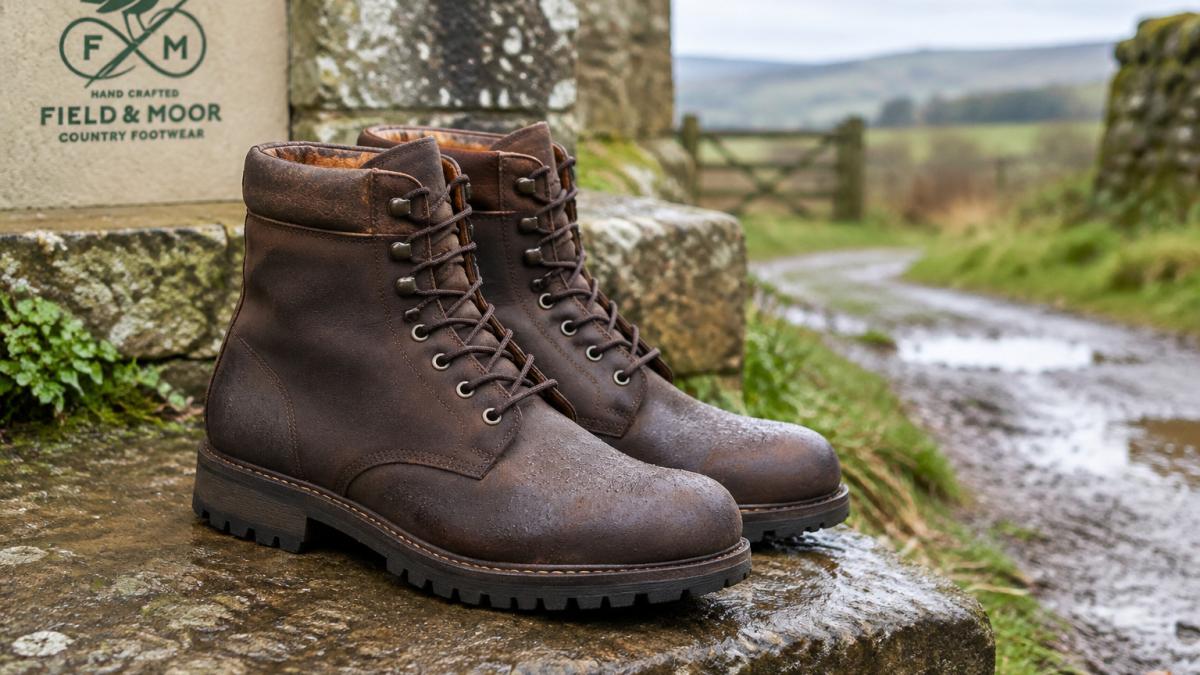
Durability is where leather earns its reputation. The Sparrowhawk Mid Brown grain laced boot (£150.00) is Goodyear welted, with a leather lining and a re-soleable construction.

Warmth comes from the lining's ability to insulate without trapping damp. Leather provides modest insulation, so pair it with a suitable sock for cold days.
Wet-weather performance depends on the whole build, not the lining alone. Expect:
- Good: a leather upper treated with a suitable dressing and a leather lining in dry or drizzly conditions
- Better: a membrane-lined boot in sustained rain
- Best: a combined build with a treated upper and a membrane layer for serious wet work
Watch out: leather that is never treated will absorb water and stiffen. Regular conditioning keeps the upper supple and water-resistant over the life of the boot. For a step-by-step routine, read maintain leather boots step by step.
Country Boots for Walking: Fit, Break-In and Blister Prevention
A leather-lined boot needs a little time before it feels right. The lining must settle and the upper must bend where your foot bends. Rushing this stage is the most common reason people give up on a good pair.
Expected Break-In Time
Most leather-lined country boots take between two and four weeks of regular wear to feel comfortable. Start with short walks on dry ground, then build up to longer days. Leather softens with body heat and movement, so the fit typically loosens slightly across the first few weeks.
Keep these points in mind:
- Wear the boots with the socks you will use on shoots or walks
- Increase wear time gradually rather than wearing them all day at once
- Expect a small change in fit as the leather moulds to your foot
Preventing Blisters
Blisters usually come from friction and moisture, not the boot alone. Our guide to specific, practical ways to prevent blisters covers what to do before the first long walk. Leather-lined boots reduce both when fitted and worn correctly.
Practical steps to avoid blisters:
- Choose a sock suited to walking, ideally a thick, cushioned wool or wool-blend pair
- Check the heel for slip, since a loose heel causes most blisters
- Address hot spots early with a plaster or tape at the first sign of rubbing
- Carry spare socks on long days so you can change into dry pairs
For a detailed guide to socks that protect your feet, see our article on how to choose country walking socks. Our House of Cheviot socks are knitted by hand in the Scottish Borders.
How to Care for Leather Boots So the Lining Lasts
Good care extends the life of both the upper and the lining, but the lining is where most owners fall short. Leather is simple to look after, yet the interior needs its own routine because it takes the brunt of sweat, friction and damp.
Follow this routine:
- Brush off mud and dirt after each wear, once dry
- Wipe the lining with a dry cloth to remove sweat and dust, then leave the boot open to air
- Let boots air dry at room temperature, away from direct heat
- Stuff them with paper to hold their shape while drying and to draw moisture from the lining
- Condition the upper every few weeks, or after heavy wet use
For the lining specifically, a few habits make a real difference. Turn the boot upside down after a long day so moisture can drain away from the toe. If the lining feels damp, pack it loosely with newspaper and change the paper after a few hours; this draws moisture out without the cracking that comes from direct heat. Avoid drying boots near radiators or open fires, since heat cracks leather and can damage the lining's suppleness. Use a conditioner suited to your leather type, and keep it off the lining unless the product is formulated for it.
Watch out: a leather lining that is never cleaned can stiffen and harbour odour; a dry cloth after each wear is usually enough, but a damp cloth followed by thorough air drying is needed if the interior feels tacky.
Repair is part of ownership too. A Goodyear-welted boot lets a cobbler replace the sole rather than the whole boot. For a full routine, read our guide on how to maintain leather boots step by step.
Limitations: When a Leather Lining Is Not the Right Choice
A leather lining is not the answer to every boot question. Be honest about where it falls short.
- Sustained heavy rain: a membrane lining keeps water out more reliably
- Very hot or humid weather: lighter, more open designs may suit better
- Tight budgets: leather-lined boots cost more upfront than synthetic-lined alternatives
- Minimal maintenance: untreated leather dries out and stiffens quickly
Consider the long-term cost too. A leather-lined, re-soleable boot can last many years with regular care and resoling, which often works out cheaper per wear than replacing a cheaper boot every season. That said, if you rarely wear boots, the upfront price may not justify the benefit.
Choosing Your Pair: A Decision Guide by Activity and Weather
Match the boot to how and where you use it.
- Dry, mild walking and light country use: a leather-lined boot with a treated leather upper
- Shooting and fieldsports in mixed weather: a leather-lined boot with a membrane layer for rain
- Wet, muddy yard work: a membrane-lined boot with a sturdy sole
- Town wear that needs to look smart: a sleek leather-lined Chelsea style
Think about who wears the boot as well. Someone who walks long distances needs strong blister protection and a settled fit. A shooter standing still for hours needs warmth and dryness. A dog walker needs something durable enough for daily use.
Booking a Fitting and Choosing Your Next Pair
Fit matters more than any single feature. Try boots on in the afternoon, when your feet are at their largest, and wear the socks you plan to use. Check that your heel stays put, your toes have room, and the ankle feels supported without pinching.
If you are unsure about width or arch support, our team at Field & Moor can help you compare options. Browse the range and book a fitting or ask our team about the right pair for your activity.
Ready to find a leather-lined boot that suits your ground and your season? Start with the Field & Moor range and choose the build that fits how you spend your days.
Frequently Asked Questions
What are the benefits of leather-lined country boots?
Leather-lined country boots keep the foot in contact with a natural material that wicks moisture away from the skin, which reduces the damp, clammy feel that synthetic linings can develop after a long day. Leather also tends to conform to the foot over time, so the fit usually improves with wear rather than loosening. Because the lining is leather rather than a bonded textile, it resists abrasion and tends to outlast cheaper linings. The trade-off is weight and a longer break-in period, so they suit people who wear boots daily more than occasional users.
Are leather-lined boots waterproof?
A leather lining on its own does not make a boot waterproof. Waterproofing comes from the upper leather treatment, the stitching and welt construction, and any membrane fitted beneath the lining. Field & Moor's Sparrowhawk boot is leather lined and Goodyear welted, which means the lining sits inside a leather-lined, Goodyear welted construction. Leather linings are better described as breathable and comfortable than as a barrier to water.
How do you care for leather-lined boots?
Let boots dry at room temperature, away from radiators, after wet use, and stuff them with paper to hold their shape. Clean mud off once it has dried, then condition the outer leather with a suitable product, taking care not to saturate the lining. Check the stitching and welt periodically, since a Goodyear welted boot can be resoled, which extends its life considerably. Regular care preserves both the outer leather and the lining.
Are leather-lined boots suitable for walking?
Yes, provided the fit is right. Leather-lined country boots suit long walks on mixed terrain, but expect a break-in period of several days to a few weeks as the leather softens and shapes to your foot. Wear thick socks during break-in, avoid long first outings, and address hot spots early to prevent blisters. Once broken in, the lining's breathability helps reduce moisture build-up on longer walks.
