
How to Choose Boots for Pheasant Shooting: A 2026 Guide

Table of Contents
- Start With Your Role and Terrain, Not the Boot
- Leather Boots vs Wellington Boots: The Core Trade-Off
- Waterproof Country Boots: What Actually Keeps Water Out
- Grip and Sole Choice for Muddy Ground and Rough Terrain
- Best Boots for Game Shooting: Ankle Support, Warmth and All-Day Comfort
- Boots for Muddy Fields: Socks, Fit and Blister Prevention
- Shooting Boots for Women: Sizing and Fit Differences That Matter
- Care, Drying and Reproofing: Making a Pair Last the Season
- Conclusion: Match the Boot to the Day, Then Look After It
- Frequently Asked Questions
Last Updated: October 6, 2026
Start With Your Role and Terrain, Not the Boot
The boots come last. That is the counterintuitive part of how to choose boots for pheasant shooting, and it is where most buyers go wrong. At Field & Moor, we see it constantly: people fall for a boot in a shop or online, then discover it is wrong for the ground they actually stand on. Start with two questions instead. Are you standing on a peg or walking a line? And what is underfoot: mud, stubble, heather, or wet clay?
Those two answers narrow the field faster than any brand list. A peg gun who rarely moves needs warmth and a stable platform. A beater who covers miles needs something lighter with real ankle support. Get this order right and the rest of the decision becomes simple.
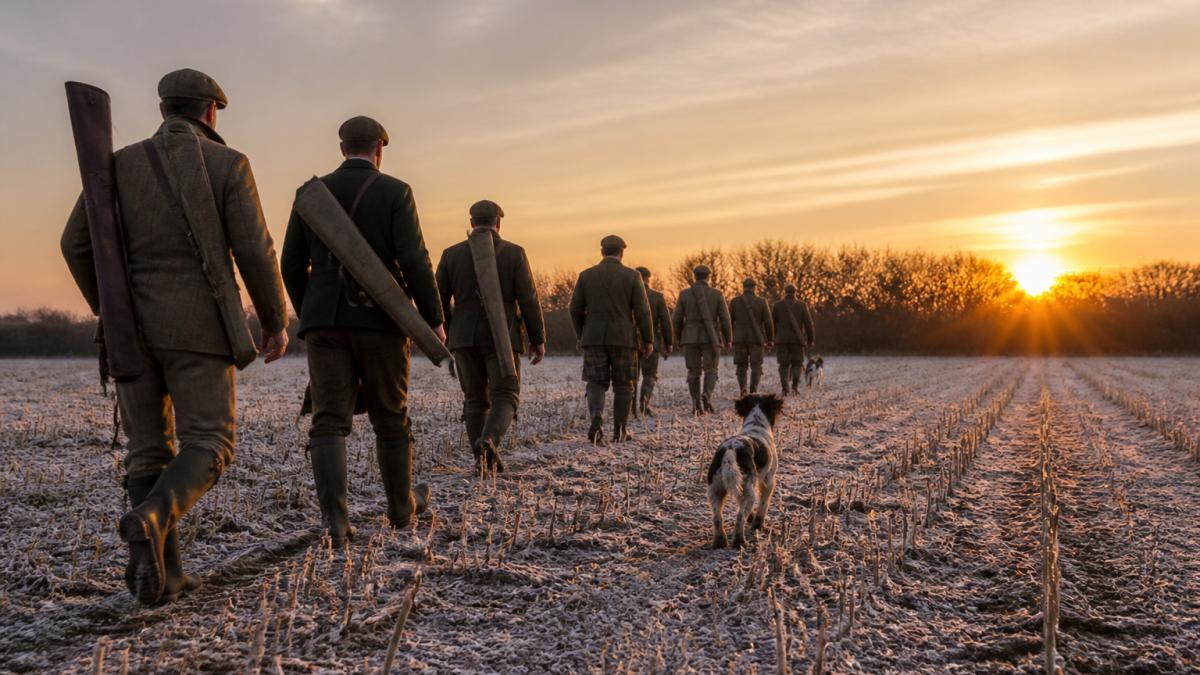
Standing on a Peg vs Walking the Line
A peg is a fixed position, often for an hour or more at a time. Cold seeps up through the soles and feet go numb long before the drive ends. Insulation and a sole that grips wet grass matter more than weight.
Walking the line is the opposite job. Beaters, pickers-up, and walking guns cover rough ground for hours. Here, weight and ankle support decide whether you enjoy the day or endure it. A stiff, heavy boot that suits a peg will punish you by the second drive.
The practical rule: peg guns should prioritise warmth and stability, while walkers should prioritise support, grip, and a boot that flexes with the foot. Most people shoot both roles across a season, so be honest about which you do more.
Leather Boots vs Wellington Boots: The Core Trade-Off
Leather boots and wellington boots solve different problems, and the honest answer is that most people who shoot regularly end up owning both. Leather gives support, fit, and all-day comfort on uneven ground. Wellies give total waterproofing and easy cleaning in deep mud and standing water. Neither wins outright; the day decides.
A good leather shooting boot, laced and welted, holds the ankle and flexes at the ball of the foot. That is why it walks well over tussocks and rutted gateways. A wellington is a single moulded shell: quick to pull on, quick to hose down, but with less ankle support and a looser fit.
The Trade-Offs Side by Side
| Consideration | Laced leather boot | Rubber wellington | Insulated neoprene wellie |
|---|---|---|---|
| Ankle support | High, laced, locked heel | Low, loose shell | Low to moderate |
| Waterproofing | High, if welted and maintained | Total, in standing water | Total, in standing water |
| Warmth | Good with a wool sock; cork midsole helps | Poor, cold seeps through rubber | Best, neoprene traps heat |
| Walking comfort over miles | Best | Poor, rubs on long walks | Moderate, warmer but heavy |
| Cleaning speed | Slower, needs brushing and reproofing | Fastest, hose and go | Fast, hose and go |
| Best ground | Rough, uneven, mixed, dry-cold | Deep mud, standing water, short static days | Flooded pegs, cold wet static days |
Read that table against your own season. If you beat over miles of tussocky ground, leather wins on support and comfort. If you stand at a peg in a flooded gateway, an insulated wellie keeps your feet warmer and drier than leather ever will.
When Leather Wins
Leather wins on distance, uneven ground, and cold dry days. Laced leather boots lock the heel down and support the ankle over rough, overgrown ground. They also breathe, so feet stay drier on a long walk than they do inside a rubber shell.
Our Osprey laced country boot shows what this looks like in practice: a thick greased leather upper, a Sympatex waterproof and breathable lining, and a Vibram rubber Commando sole for traction on mud and snow. Storm-welted construction adds waterproofing, and cork insulation in the midsole helps regulate temperature.

When Wellies Win
Wellies win in deep, standing water and heavy clay. If the ground is a bog and you will be wading gateways all day, a rubber boot keeps you dry where leather eventually wets through. They are also the fastest boot to clean.
The trade-off is support and fit. A wellington is loose by design, so it rubs on long walks and gives the ankle little help on rutted ground. For a short, wet, static day, that is fine. For miles of beating, it is not.
A Simple Decision Rule
- Dry stubble or heather, walking miles: laced leather boot.
- Deep mud and standing water, short static day: rubber wellington.
- Flooded peg in freezing weather: insulated neoprene wellie.
- Mixed ground, unsure: laced leather boot with a medium-lug sole, the all-rounder.
If you want the convenience of a pull-on without giving up all support, our Golden Eagle and Eagle styles bridge the gap for shorter, wetter days when speed matters more than lacing up. Every style comes in men's and ladies' fits, so you can match the boot to the day rather than compromising on fit.
Waterproof Country Boots: What Actually Keeps Water Out
Waterproofing is a system, not a single feature. A waterproof country boot keeps water out through three things working together: the leather, the membrane lining, and the construction that joins upper to sole. Miss one and water finds the gap.

Start with the leather. A thick, greased or hydrophobic upper sheds rain and stays supple. Next is the lining. A membrane such as Sympatex sits inside the boot and blocks water while letting vapour escape, so sweat does not build up. Then comes construction: a storm-welted or Goodyear-welted boot seals the upper to the sole far better than a simple cemented join.
Finally, the tongue and lacing. A bellows tongue stops water running straight down the laces into the boot. It is a small detail that makes a big difference on a wet day. As the Met Office explains in its guidance on seasonal weather, wet and cold conditions are the norm through the shooting season, so build for rain rather than hoping to avoid it.
Grip and Sole Choice for Muddy Ground and Rough Terrain
Grip comes from the sole, and the sole should match the ground. A deep-lugged rubber sole bites into mud and wet grass; a shallow or worn tread slides. Vibram rubber Commando soles are a common choice for country boots because the lug pattern clears mud and holds on slopes. Reliable traction on the field is as essential as the precision required when choosing hunting knives for the inevitable work that follows a successful flush.
Most guides stop there. The useful part is knowing which sole to pick for the ground you actually stand on.
Reading a Tread Pattern
Look at three things: lug depth, lug spacing, and heel brake.
- Lug depth: deeper lugs grip soft mud but clog on clay.
- Lug spacing: wider gaps shed mud instead of packing it in.
- Heel brake: a squared heel edge stops you sliding downhill.
A sole that works on wet grass may pack solid on heavy clay. If your ground is clay-heavy, choose wider spacing so the mud self-clears with each step. For mixed terrain, a medium-depth commando-style lug is the sensible all-rounder.
Matching the Sole to the Ground
| Ground you shoot over | What the sole needs | Why |
|---|---|---|
| Wet grass and stubble | Medium lugs, moderate spacing | Bites without clogging |
| Deep soft mud | Deep, widely spaced lugs | Clears as you lift the foot |
| Heavy clay | Wide spacing, shallow-to-medium depth | Self-clearing; deep lugs pack solid |
| Steep slopes and banks | Aggressive heel brake, deep lugs | Stops downhill slide |
| Mixed rough ground | Medium commando lug | Compromise across all surfaces |
| Frozen or snow-covered | Soft rubber compound, deep lugs | Hard rubber skates on ice |
Why Mud Release Matters More Than Lug Depth
A common mistake is assuming the deepest lug always grips best. On heavy clay, deep lugs fill with mud and turn into a slick, flat sole within a few steps. The lug pattern has to release the mud as the foot lifts, which is why spacing and shape matter as much as depth.
11 " Laced Country Boot - Greased brown Leather - Men’s - Osprey →
A common pattern among experienced shooters is to keep one pair of boots for soft ground and another for clay-heavy ground, rather than expecting one sole to do everything. If you only own one pair, a medium-depth commando sole with moderate spacing is the safest all-round choice.
Checking Wear Before the Season
Worn lugs are a safety issue, not just a comfort one. Check the heel and the ball of the foot, where wear shows first. If the lugs there have flattened to a smooth patch, the boot will slip on wet grass and slopes long before the upper looks tired. A welted leather boot can be resoled, so a worn sole is not the end of the boot, but it is a job to do before the season, not during it.
Best Boots for Game Shooting: Ankle Support, Warmth and All-Day Comfort
The best boots for game shooting balance three things: ankle support, warmth, and comfort over a full day. Support protects you on rough ground, warmth keeps feet working in the cold, and comfort is what gets you to the last drive without thinking about your feet.
Ankle support comes from a higher cut and a laced, locked fit. Warmth comes from insulation and from what you wear on your feet, not just the boot. Comfort comes from a sole that cushions and a fit that holds the heel without pinching.
Our Osprey laced country boot is built around this balance. The full leather-lined insole and cork midsole add comfort and temperature control, while the double-sided buckle fine-tunes the fit. For a pull-on option, our Golden Eagle and Eagle styles suit shorter, wetter days when speed matters more than lacing up.
Boots for Muddy Fields: Socks, Fit and Blister Prevention
Socks and fit prevent blisters more than any boot feature. A boot that fits well and a sock that wicks and cushions will keep your feet intact; a great boot with a thin cotton sock and a loose heel will not. This is the part most guides skip.
Start with the sock. Wool blends wick moisture and cushion the heel and toe. House of Cheviot shooting and country socks, knitted in the Scottish Borders, are made for exactly this: long days on your feet in cold, wet conditions.
Then get the fit right:
- Wear your shooting socks when you try boots on
- Leave a thumb's width at the toe
- Check the heel locks down with no lift
- Walk on a slope to test the ankle hold
- Size for the thicker sock you will actually wear
A common mistake is buying boots that feel snug in a thin sock. Add a wool shooting sock and the same boot pinches across the toes.
Shooting Boots for Women: Sizing and Fit Differences That Matter
Shooting boots for women need a women's last, not a smaller men's boot. Feet differ in width, arch, and heel shape, so a scaled-down men's boot often fits badly: loose in the heel, tight across the instep. Buy from a range built on a women's last.
Our Osprey laced country boot in tan grained leather is made on a women's last and comes in a full run of sizes. The hydrophobic leather upper, Vibram Commando sole, and storm-welted construction give the same protection as the men's version.
Sizing runs across the range, in both men's and ladies' fits, so most people can find a true match rather than compromising. The double-sided buckle helps if you sit between sizes or have a high instep.
Care, Drying and Reproofing: Making a Pair Last the Season
Care is what turns a good boot into a decade-long one. Clean off mud, dry at room temperature, and reproof the leather regularly. Do those three things and a welted leather boot can be resoled and worn for years.
- Clean: brush off mud while it is still damp, not baked on.
- Dry: air-dry away from radiators and fires, which crack leather.
- Reproof: apply leather conditioner or wax to keep the upper supple and water-repellent.
- Store: keep them on a shelf, not in a damp bag, between shoots.
Never dry leather boots on a radiator or in front of a fire. The heat pulls oils out of the leather and it cracks. Stuff them with newspaper and let them dry slowly instead. A horsehair brush, like the one included with our Osprey boots, is the right tool for the cleaning job.
Conclusion: Match the Boot to the Day, Then Look After It
Choosing boots for pheasant shooting comes down to matching the boot to the day, then looking after it. Peg or line, mud or stubble, leather or wellie: answer those and the choice makes itself.
If you want one boot that handles rough ground, wet weather, and the walk back to the car, our handcrafted Osprey laced country boot pairs a Sympatex waterproof lining with a Vibram Commando sole and storm-welted construction. For quicker pull-on days, the Golden Eagle and Eagle styles do the job, and every style comes in men's and ladies' fits. Add a pair of House of Cheviot socks and you have a setup built to last the season and beyond.
Frequently Asked Questions
Are wellington boots or leather boots better for pheasant shooting?
It depends on your role and the ground. Wellies suit standing on a peg in saturated fields because they are fully waterproof and easy to hose down. Leather pheasant shooting boots suit walked-up days, beating and uneven or overgrown ground, where ankle support and a stiffer sole matter more. Many Guns keep both and pick based on the forecast and terrain.
Should pheasant shooting boots be waterproof?
Yes. A full day in wet grass, mud and rain will soak through anything untreated. Look for a waterproof and breathable membrane, such as the Sympatex lining used in Field & Moor's Osprey boots, combined with storm-welted construction and a greased or hydrophobic leather upper. Breathability matters as much as waterproofing, because trapped sweat makes feet cold.
What sole is best for muddy shooting ground?
A deep, widely spaced rubber lug sole clears mud as you walk and grips better than a shallow pattern. The Vibram rubber Commando sole on Field & Moor's Osprey boots is built for mud and snow. Avoid flat or heavily worn soles, and check the tread before each season, since packed mud fills shallow lugs and turns them slick.
How should shooting boots fit?
Leave roughly a thumb's width at the toe and make sure your heel stays locked when you walk. Field & Moor lists the internal last length for each size, so you can measure your foot and compare. Wear your shooting socks when trying boots on, and size up if you plan thick socks in cold weather.
The season punishes bad footwear faster than any other kit, and wet feet end a day early. Field & Moor builds boots for exactly this ground: handcrafted leather uppers, waterproof and breathable Sympatex linings, rugged Vibram soles, and storm-welted construction made to be repaired rather than replaced. Get the fit right with our full size range and a proper shooting sock, and your boots will outlast the coat you bought with them.