
Marsh Harrier vs Harrier Hiking Boots Compared

Last Updated: November 16, 2026
Quick Summary
The Marsh Harrier is a 23 cm storm-welted boot with a half bellow tongue, built for wet moorland and mud, while the Harrier is a shorter Goodyear-welted boot with treble stitching, D rings and ski hooks for faster lacing and town use. Both share hydrophobic chestnut grain leather, a Sympatex lining and Vibram soles, and both cost £225.
- The Marsh Harrier uses storm-welted construction; the Harrier uses Goodyear welting with treble stitching.
- The Marsh Harrier is a 23 cm cut with a half bellow tongue for wet ground.
- The Harrier has D rings and ski hooks, giving faster lacing and secure heel fitment.
- Both boots use a Sympatex waterproof and breathable lining with Vibram soles.
- A UK 8 last measures 28.4 cm inside, a UK 9 measures 29.1 cm and a UK 10 measures 29.7 cm.
Table of Contents
- Marsh Harrier vs Harrier Hiking Boots: The Core Differences
- Boot Construction and Materials in Both Models
- Leather Type and Water Resistance Compared
- Waterproof Country Boots: How the Sympatex Lining Performs
- Height, Ankle Support and the 23 cm Cut
- Sole Stiffness, Grip and Traction on Rough Terrain
- Hiking Boot Fit and Sizing for Both Models
- How to Break In Leather Walking Boots Without Blisters
- Which Boot Suits Your Terrain and Pursuits
- Choosing Your Pair from Field & Moor
- Frequently Asked Questions
Marsh Harrier vs Harrier Hiking Boots: The Core Differences
Selecting the right footwear for the British outdoors requires balancing moisture protection with comfort, as noted by The Ramblers' guidance on walking gear. The Marsh Harrier and the Harrier are handcrafted leather boots designed for challenging ground. This guide from Field & Moor compares both models on construction, leather, waterproofing, height, sole and fit.
Both models share hydrophobic chestnut grain leather, a Sympatex waterproof and breathable lining, and a Vibram sole unit. Differences lie in the welt, the cut of the upper, and the lacing system.
Side-by-Side Specification Table
| Specification | Marsh Harrier | Harrier |
|---|---|---|
| Upper | Hydrophobic chestnut grain leather | Chestnut grain leather and suede combination |
| Lining | Sympatex waterproof and breathable | Sympatex waterproof and breathable |
| Construction | Storm-welted | Goodyear welted, treble stitched |
| Sole | Vibram Commando | Vibram sole unit |
| Shaft height | 9 inch | Not specified as a nine-inch cut |
| Tongue | Half bellow | Full bellows |
| Gun-rest | Reinforced, detachable | Detachable set included |
| Lacing | Standard | D rings and ski hooks |
| Price | £225.00 | £300.00 (chestnut), £225.00 (tan leather and Felefrio suede) |
Boot Construction and Materials in Both Models
Construction dictates the longevity and water-shedding capability of the boot. The Marsh Harrier employs storm-welted construction, which provides an extra seal against moisture ingress at the sole-to-upper junction. Conversely, the Harrier uses Goodyear welting with treble stitching, a method favoured for its blend of durability and flexibility.
Leather Type and Water Resistance Compared
Both boots feature thick, hydrophobic chestnut grain leather. According to The Society of Leather Technologists and Chemists, hydrophobic treatments significantly improve the water-repellency of natural hides in damp environments. The Marsh Harrier incorporates a half bellow tongue to prevent debris and water ingress, while the Harrier utilizes a full bellows tongue design.
Waterproof Country Boots: How the Sympatex Lining Performs
Both models use a Sympatex membrane. This non-porous, hydrophilic membrane is designed to transport moisture away from the foot while remaining waterproof. As highlighted by The British Footwear Association, the breathability of such linings is critical for maintaining foot health during long days in the field.
Height, Ankle Support and the 23 cm Cut
Ankle stability is influenced by the shaft height and the lacing mechanism. The Marsh Harrier features a 23 cm cut, providing significant support for uneven terrain. The Harrier, while shorter, compensates with a D-ring and ski-hook lacing system that allows for a precise, secure heel fitment, reducing the risk of internal movement.
Sole Stiffness, Grip and Traction on Rough Terrain
Both boots are equipped with Vibram soles. The Marsh Harrier utilizes the Vibram Commando sole, which features deep, aggressive lugs designed to clear mud and debris effectively. The Harrier uses a versatile Vibram sole unit that balances grip with a slightly more flexible feel, suitable for mixed terrain.
Hiking Boot Fit and Sizing for Both Models
Fit is the most common cause of returns. Field & Moor provides the internal length of the wooden last for each size: a UK 8 measures 28.4 cm, a UK 9 measures 29.1 cm, and a UK 10 measures 29.7 cm. Measure your feet in the afternoon when they are at their largest, and ensure you are wearing your preferred walking socks during the process.
Internal last length by UK boot size
How to Break In Leather Walking Boots Without Blisters
Breaking in leather requires a gradual approach to allow the hide to conform to your foot shape.
- Wear the boots indoors for 30-minute intervals.
- Gradually increase duration over the first week on short, flat walks.
- Use a two-sock system—a thin liner beneath a thick wool sock—to reduce friction.
- If you notice a 'hot spot', remove the boots immediately to prevent a blister from forming.
Avoid lacing the instep too tightly, as this restricts the natural flex of the leather and can lead to discomfort.
Which Boot Suits Your Terrain and Pursuits
| Main use | Better choice | Why | What you give up |
|---|---|---|---|
| Daily dog walks on pavement and park paths | Harrier | Shorter cut, D rings and ski hooks for fast lacing, suede combination upper transitions to town | Less ankle height and less deep-lug grip in mud |
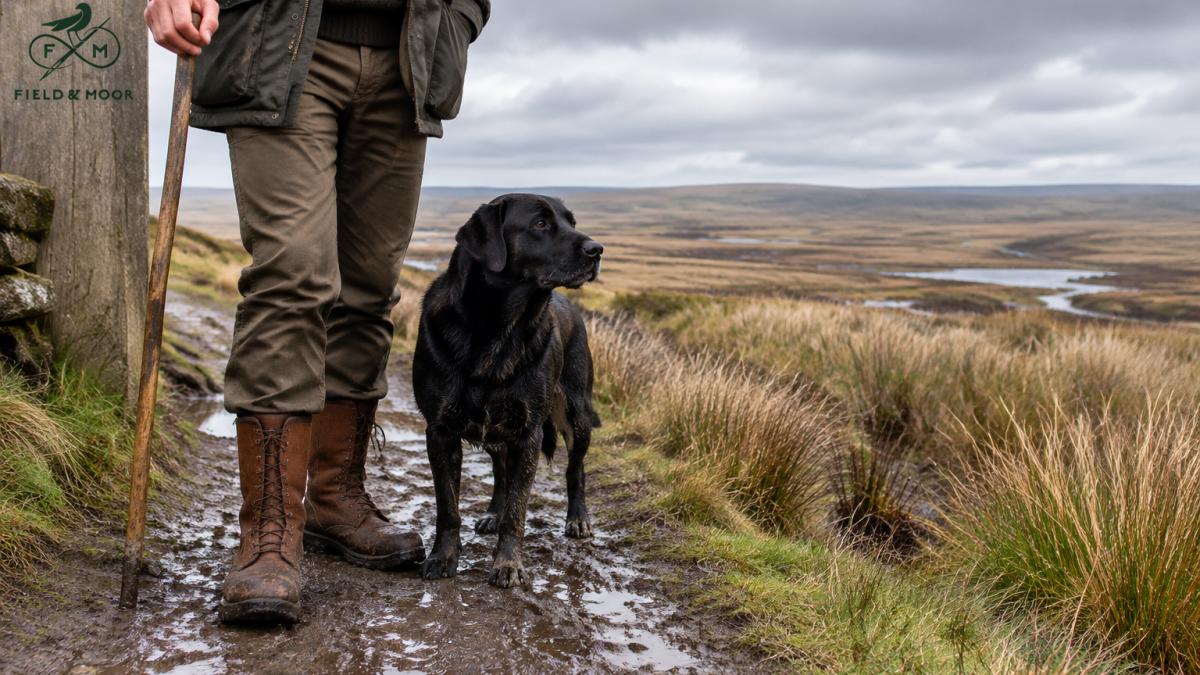
| Wet grass, moorland and tall bracken | Marsh Harrier | Nine-inch cut, storm welt and half bellow tongue keep water and debris out | Slower lacing and a taller, warmer boot in summer |
| Mud, snow and soft peat | Marsh Harrier | Vibram Commando deep lugs and heel breast bite and clear | Heavier feel and clay can pack the lugs |
| Long-distance walks on mixed ground | Harrier | Goodyear welt and treble stitching, secure heel fitment from ski hooks | Suede panel needs more re-proofing |
| Rough terrain with rocks and debris | Either, leaning Harrier | Stiff sole protects the foot; denser lug pattern on rock and gravel | Marsh Harrier's deep lugs feel vaguer on hard rock |
| Shooting and field sports | Marsh Harrier for wet days, Harrier for mixed days | Both have detachable gun rests; Marsh Harrier wins on wet ground, Harrier on fast lacing and heel lock | Neither is a dedicated shooting boot with a full-grain toe cap |
| Town and travel | Harrier | Suede combination upper and shorter cut look less like a field boot | Less protection from thorns and wet grass |
Choosing Your Pair from Field & Moor
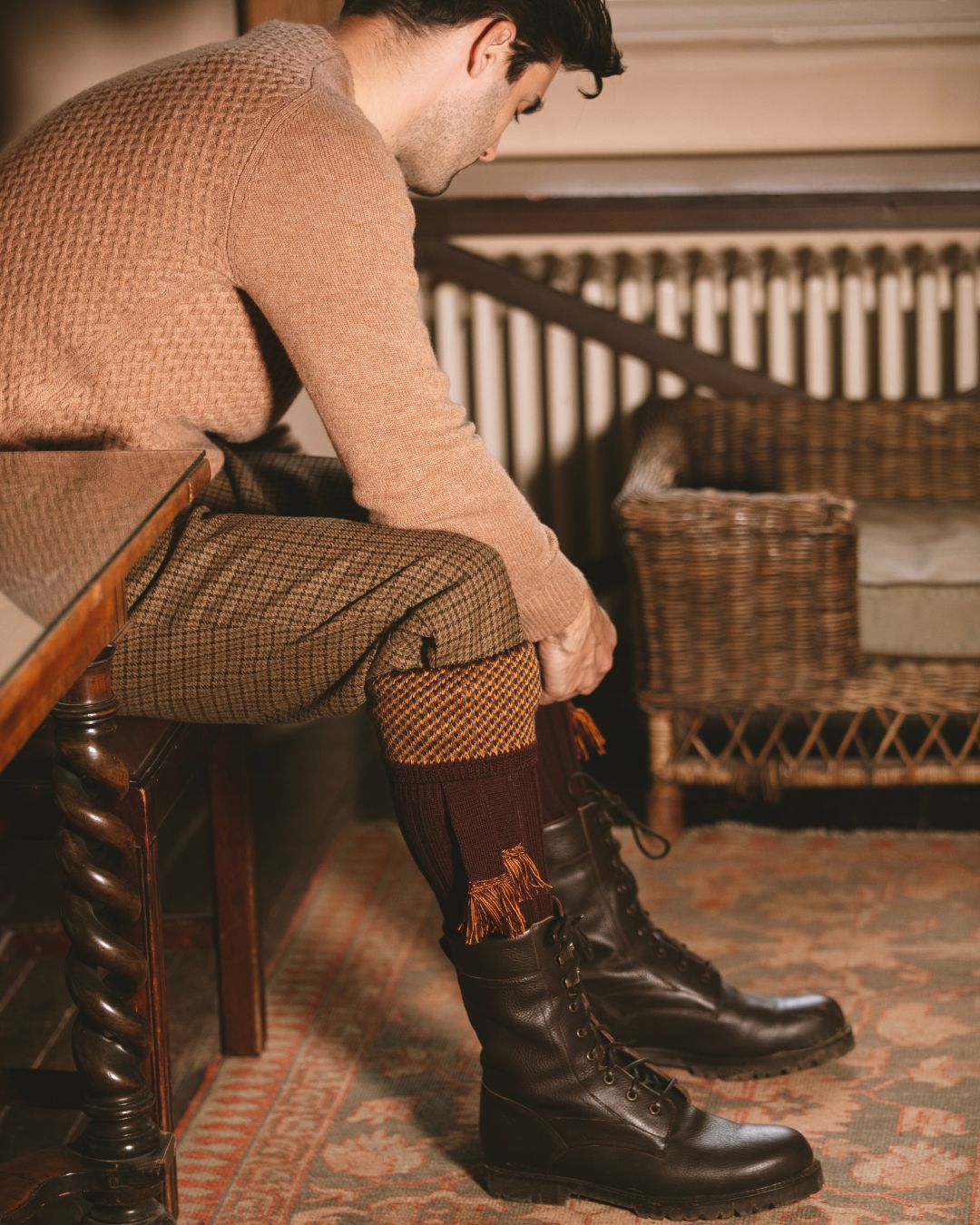
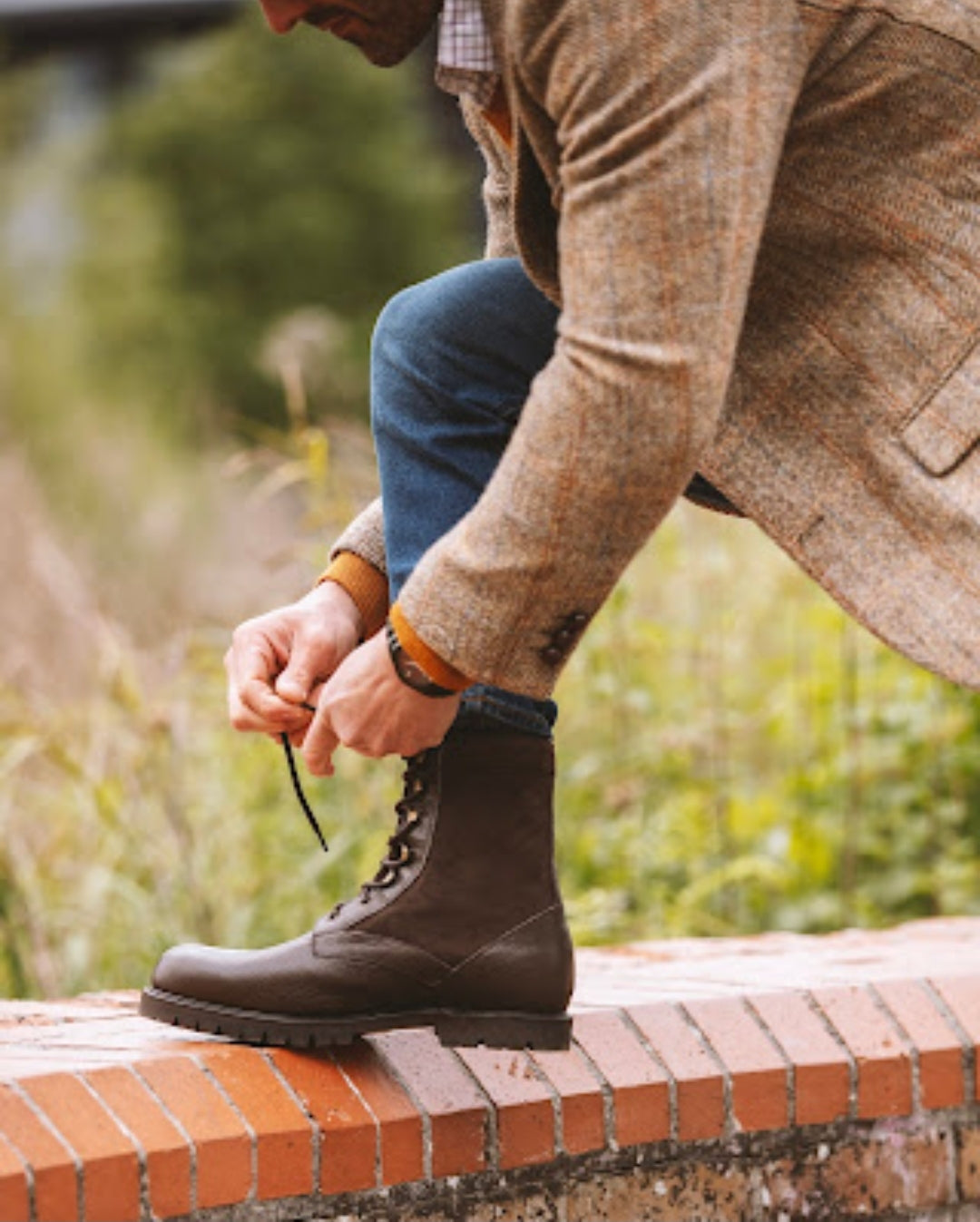
Both the Marsh Harrier and the leather Harrier options are priced at £225. The Marsh Harrier 23 cm hiking and walking boot is designed for demanding, wet conditions. The ladies' Marsh Harrier provides an equivalent build tailored for women. For those preferring the Harrier's Goodyear-welted construction and ski-hook lacing, the Harrier in tan leather and Felefrio suede is the primary option.

Frequently Asked Questions
What is the difference between Marsh Harrier and Harrier boots?
The Marsh Harrier is a 23 cm boot with a storm-welted construction and half bellow tongue. The Harrier uses Goodyear welting with treble stitching and a full bellows tongue. Both share Sympatex linings and Vibram soles.
Are the Harrier boots waterproof enough for wet grass and rough ground?
Yes, both models feature a Sympatex waterproof and breathable lining, which is designed for wet outdoor conditions.
How should hiking boot fit and sizing work when ordering online?
Field & Moor publishes the internal length of the wooden last for each size. Measure your foot from heel to longest toe and compare it to the internal measurements provided.
How do you break in leather walking boots like these without blisters?
Wear them indoors for short periods, gradually increasing time. Use a two-sock system to manage friction and avoid over-tightening the laces at the instep.
