
Alternatives to Heavy Leather Shooting Boots: 2026 Guide

Table of Contents
- Why Shooters Are Moving Away From Heavy Leather Boots
- Quick Comparison: Lightweight Alternatives to Heavy Leather Shooting Boots
- How to Ensure Proper Fit for Lace Up Boots
- Lightweight Waterproof Shooting Boots: What Modern Materials Offer
- Weight-to-Support Ratio: The Metric That Changes Everything
- Break-In Period Expectations for Modern Alternatives
- Terrain Suitability: Upland, Marsh and Woodland Compared
- Maintaining Goodyear Welted Boots and Other Welted Constructions
- Sustainability and Repairability: Built to Last, Built to Fix
- Choosing the Right Boot for Your Foot Shape and Field Conditions
- Frequently Asked Questions
Last Updated: September 28, 2026
Why Shooters Are Moving Away From Heavy Leather Boots
The modern shift toward alternatives to heavy leather shooting boots comes down to three things: weight, stiffness, and the brutal break-in period. Traditional full-leather field boots can take weeks to soften, and many shooters now want something that performs from the first outing. At Field & Moor, we've watched this change firsthand across our own range of handcrafted country boots.
Walk into any gun shop and you'll still see rows of traditional leather. But ask the person behind the counter what's actually selling, and the story changes. Shooters want lighter footwear that still handles mud, marsh and steep upland ground.
The core tension is simple. Leather earns its reputation through durability and repairability, but that same density is what makes it heavy and slow to soften. Modern constructions borrow the best of both worlds: waterproof membranes, synthetic panels and lighter sole units, all built on welted foundations that can still be repaired. Below, we'll break down what actually changed, which materials matter, and how to pick the right pair for your terrain.
Quick Comparison: Lightweight Alternatives to Heavy Leather Shooting Boots
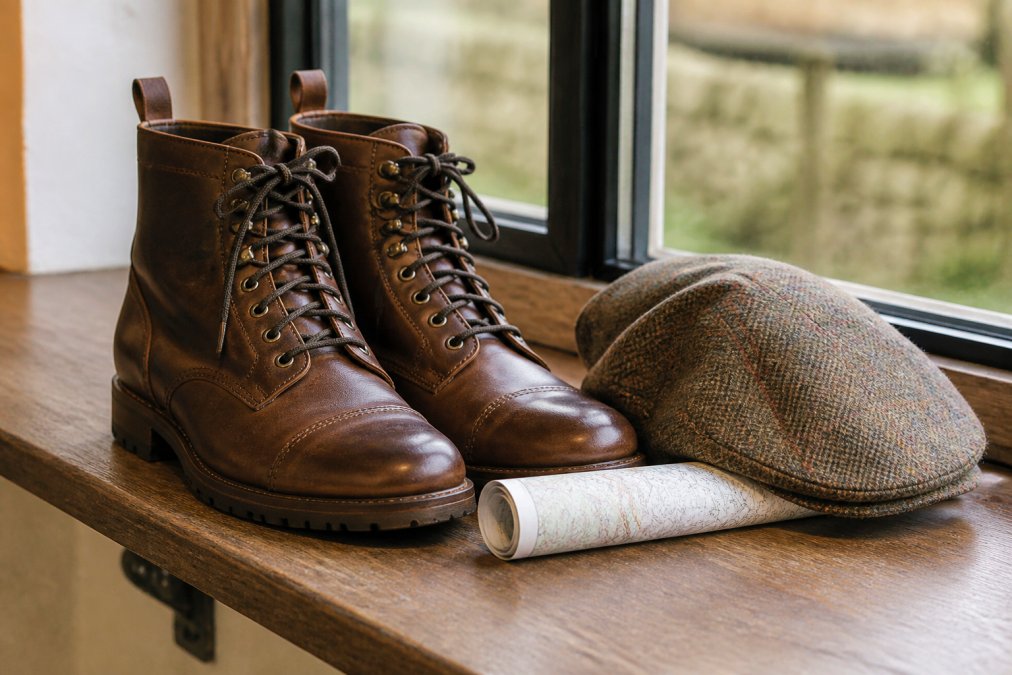
Here is the short answer. If you want lighter weight without giving up waterproofing or repairability, a storm-welted or Goodyear-welted boot with a Sympatex lining and a Vibram sole is the strongest all-round option. The table below compares the main Field & Moor models that fit that brief.
| Model | Upper | Construction | Sole | Price |
|---|---|---|---|---|
| Osprey 11" Laced Country Boot | Greased or grained leather | Storm-welted | Vibram Commando | £270 |
| Marsh Harrier 9" (Men's) | Chestnut grain leather | Storm-welted | Vibram Commando | £225 |
| Marsh Harrier 9" (Ladies) | Chestnut grain leather | Storm-welted | Vibram Commando | £198 |
| Harrier Safari/Trekking | Leather and suede | Goodyear-welted | Vibram | £225 |
| Hen Harrier (Ladies) | Tan Dallas leather | Goodyear-welted | Vibram Ripple | £112 |
The Osprey sits at the top of the range for a reason. Its thick greased leather upper, Sympatex lining and Vibram Commando sole make it a capable option for difficult terrain, and the storm-welted build keeps water out.

How to Ensure Proper Fit for Lace Up Boots
The single biggest cause of returned boots is sizing guesswork. The fix is to measure your foot and compare it against the internal length of the boot's last, not against your usual shoe size. Most manufacturers publish last dimensions for exactly this reason.
Measuring Your Foot and Using Last Dimensions
Do this at the end of the day, when your feet are at their largest. Stand on a sheet of paper with your heel against a wall, mark the tip of your longest toe, and measure the distance in centimetres. Add roughly 1 cm of clearance for thick walking socks and natural foot swell.
Then match that number to the last measurement. Field & Moor publishes an inside length for every size. For example, the men's Osprey in UK 9 measures 29.1 cm internally, while UK 10 measures 29.7 cm. If your foot measures 28.2 cm, the UK 9 gives you just under 1 cm of clearance.
Accommodating Wide Feet and High Arches
A lace-up boot is far more forgiving than a slip-on for wider feet and higher arches. The lacing system does the work: you can open the lower section across the instep and keep the heel locked with the upper hooks.
Look for boots with a combination of D-rings and ski hooks, like the Harrier range. That setup lets you tension the heel separately from the forefoot, which is exactly what a high instep needs. If you have a very wide foot, size up by half a size and tighten the lacing rather than forcing a narrow last.
Lightweight Waterproof Shooting Boots: What Modern Materials Offer
A lightweight waterproof shooting boot combines a hydrophobic or treated leather upper with a waterproof membrane and a lighter sole unit. The membrane does the waterproofing and breathability; the leather provides abrasion resistance and structure. That division of labour is what lets modern boots shed weight without leaking.
The Three Membrane Families You Will Meet
Most modern alternatives use one of three lining types, and each behaves differently in the field:
- Hydrophilic (pore-free) membranes, such as Sympatex. Water cannot pass because there are no pores to pass through; moisture vapour moves through the polymer itself by a chemical process. They do not clog with mud or body oils and they do not delaminate in the same way as porous films, which is why they suit wet, gritty British ground.
- Microporous (ePTFE) membranes, such as Gore-Tex. Vapour escapes through billions of microscopic pores that are too small for liquid water to pass. They breathe well in dry cold but can be compromised by contamination from mud, sweat salts and conditioner if the lining is exposed.
- PU and polyester coatings, cheaper, lighter, and often found in budget boots. They work, but they degrade faster under flexing and are the first part of a boot to fail.
Field & Moor uses Sympatex across the Osprey, Marsh Harrier and Harrier ranges. The pore-free construction is tolerant of mud and grit.

How Breathability Actually Works in a Boot
Breathability is not a single number; it is a system. Vapour has to travel from your skin, through your sock, through the membrane, through the leather upper, and out. Any layer that saturates stops the whole chain.
That is why the sock matters as much as the boot. A wool or wool-blend sock moves vapour away from the skin and holds it until the boot can pass it on. A cotton sock saturates and stays wet. Pair a breathable boot with a wool sock and the whole system moves vapour away from the skin.
Reading Waterproof and Breathability Claims
The British Standards Institution guidance on footwear testing sets out how waterproof and breathability claims are verified, which is worth knowing when comparing labels. In practice, look for two things: a stated hydrostatic head (the water pressure the membrane resists before leaking) and a stated breathability figure in g/m²/24h. A boot that quotes neither is making a marketing claim, not an engineering one.
Where the Weight Actually Comes From
Weight in a shooting boot is rarely the membrane. It is the sole unit, the midsole, the leather thickness and the lining. A modern alternative typically saves weight by:
- Using a thinner, treated upper rather than a thick, heavily oiled hide
- Replacing a heavy rubber or full-leather midsole with a lighter synthetic or cork composite
- Using a cemented or stitchdown sole unit rather than a full double-sole welt
Weight-to-Support Ratio: The Metric That Changes Everything
Most boot guides quote weight and support as separate numbers. The useful figure is the ratio between them.
Think of it this way. Ankle stability and midsole cushioning provide support. Upper material, sole unit and lining add weight. Modern alternatives can push that ratio in your favour by using a lighter sole and a thinner, treated upper while keeping a stiffened heel counter and a secure lacing system.
Where this gets interesting is in the lacing and heel lock. A boot with ski hooks and D-rings can hold the heel firmly with less material than a boot that relies on a tall, rigid leather shaft. Less material means less weight, and the support comes from the closure system rather than bulk.
Break-In Period Expectations for Modern Alternatives
Modern alternatives can cut break-in time. Expect a few short walks. The reason is the construction: a thinner, treated upper can soften faster than a thick, untreated hide, and a membrane lining may not stiffen the way a full leather lining can.
A sensible approach looks like this:
- Wear the boots indoors for an hour to check heel lock
- Take two 20-minute walks on pavement before any field use
- Wear them for a half-day on soft ground next
- Reserve a full day out for after the first three stages
- Condition the leather after the first wet outing
The classic complaint about welted boots is that the break-in is brutal. That reputation comes from thick, heavily oiled leather with a rigid sole. A boot built on a lighter sole and a treated upper can skip most of that. You should still expect the leather to mould to your foot over the first few outings, and the heel to settle as the insole compresses.
11 " Laced Country Boot - Greased brown →
Terrain Suitability: Upland, Marsh and Woodland Compared
Terrain decides the boot more than any brand claim. Upland ground rewards ankle stability and a stiff sole; marsh demands waterproofing and grip; woodland asks for a quieter, more flexible boot that handles roots and mud.
| Terrain | Priority | Best Sole and Build |
|---|---|---|
| Upland | Ankle support, shock absorption | Commando sole, stiffened heel |
| Marsh | Waterproofing, traction | Storm-welted, deep-lug sole |
| Woodland | Flexibility, quiet footing | Ripple or medium-lug sole |
For upland days, a boot like the Osprey with its Vibram Commando sole and cork midsole insulation provides grip on steep, wet ground and temperature regulation. For marsh and bog, storm-welted construction reduces water penetration at the sole seam.
Woodland is where a lighter, more flexible boot can be advantageous. The Hen Harrier, with its Vibram Ripple sole, is engineered for enhanced mobility, with high shock absorbing and lightness for energy conservation for all day comfort, which suits mixed ground and long days on your feet.

Maintaining Goodyear Welted Boots and Other Welted Constructions
Welted construction is the reason a good boot can last years rather than seasons. The upper is stitched to a midsole or insole, so the sole unit can be replaced when it wears through. That single feature is what separates a repairable boot from a disposable one.
Cleaning, Conditioning and Reproofing
Mud is the enemy of stitching and leather alike. Rinse mud off with cool water, never a jet wash, and let the boots dry at room temperature away from radiators. Heat cracks leather and can delaminate a membrane.
Once dry, brush off dust with a horsehair brush, then apply a conditioner or grease to the leather. Field & Moor supplies a horsehair brush with most boots for exactly this routine. Reproof the leather every few weeks in heavy use, and pay attention to the welt seam and the flex point across the toes.
When to Resole and Repair
Check the sole for worn lugs and the welt for loose or broken stitching. When the tread flattens or the sole starts to separate, that is the point to resole, not to replace. A Goodyear-welted boot can be resoled repeatedly because the upper stays intact. A cemented boot cannot, which is why the welted construction is worth the upfront cost.
The Repairability Economics Nobody Talks About
A welted boot is repairable. Consider a boot at £270 with a resole at roughly £60-£80 every three to four years of hard use. Over a decade that is one purchase and two resoles, around £400-£430 total, or roughly £40-£43 per year.
A cemented boot that fails at the sole after two seasons can cost more over the same decade. The welted boot offers advantages on cost, comfort and waste.
End-of-Life and the Sustainability Case
Repairability is the quiet sustainability story in footwear. A boot that lasts ten years and gets resoled twice uses far fewer resources than four pairs of cemented boots that each fail at the sole. The most sustainable boot is the one you keep.
The Waste and Resources Action Programme on textile and footwear longevity highlights extending product life as one of the most effective ways to cut the environmental cost of clothing and footwear. For shooting boots, that means two things: choose welted construction so the sole can be replaced, and choose a leather upper that can be reconditioned rather than a coated synthetic that peels.
Sustainability and Repairability: Built to Last, Built to Fix
Repairability is the quiet sustainability story in footwear. A boot that lasts ten years and gets resoled twice uses far fewer resources than four pairs of cemented boots that each fail at the sole. The most sustainable boot is the one you keep.
This is where welted construction earns its keep. Goodyear and storm-welted builds let a cobbler replace the sole without disturbing the upper, so the part that moulds to your foot survives. The Waste and Resources Action Programme on textile and footwear longevity highlights extending product life as one of the most effective ways to cut the environmental cost of clothing and footwear.
Field & Moor's approach leans into this. The Harrier and Osprey ranges use Goodyear and storm-welted construction specifically so they can be repaired rather than replaced. Choosing a repairable boot is a practical decision as much as an ethical one: it costs less over a decade and keeps a familiar, broken-in pair on your feet.
Choosing the Right Boot for Your Foot Shape and Field Conditions
Fit, foot shape and terrain should drive the decision, not the label. Start with your measured foot length, then match it to the last dimensions of the boot you are considering. From there, let terrain and foot shape narrow the field.
- Wide feet or high arches: choose a lace-up with D-rings and ski hooks for adjustable heel lock
- Long-distance stalking: prioritise weight-to-support ratio and shock absorption
- Marsh and bog: prioritise storm-welted construction and a deep-lug sole
- Mixed and woodland: a lighter, more flexible boot with a medium-lug sole
- Town and field: a boot with clean lines that still carries a proper sole unit
For most shooters who want one pair that does both the field and the drive home, the Osprey 11" Laced Country Boot is a strong choice. The greased leather upper handles wet ground, the Sympatex lining keeps feet dry, the Vibram Commando sole grips mud and snow, and the detachable gun-rest protects the vamp during a day's shooting. It also looks smart enough for town.
If you want a lighter, more flexible option for mixed ground, the Harrier in leather and suede brings the same welted construction and waterproofing in a mobile package. And for anyone who has spent years fighting a stiff leather boot into submission, the point is this: you may find a different experience with modern alternatives.
The challenge with moving away from heavy leather is finding a boot that keeps the durability and repairability you value while shedding the weight and stiffness you don't. Field & Moor builds exactly that: handcrafted boots with Goodyear and storm-welted construction, waterproof Sympatex linings and rugged Vibram soles, in a range of sizes with published last dimensions so you can get the fit right the first time. Get started with Field & Moor and find a pair built to handle the field and the town for years to come.
Frequently Asked Questions
Are synthetic shooting boots as durable as leather?
Modern synthetic uppers with reinforced stitching and quality sole units can match leather for durability in most field conditions. The key is construction: Goodyear or storm-welted builds, treble stitching and Vibram rubber outsoles all extend lifespan. Leather still wins on repairability because it can be conditioned and resoled repeatedly, but advances in synthetic mesh and hydrophobic treatments mean the gap has narrowed considerably. Look for reinforced toe protection and abrasion resistance at high-wear points.
What are the benefits of Sympatex linings in country footwear?
Sympatex is a waterproof and breathable membrane that keeps water out while allowing moisture vapour from sweat to escape. In practice, this means drier feet after a long day on the moor or in woodland. Unlike some coatings that degrade with flexing, Sympatex is laminated into the boot construction, so it holds up through repeated wetting and drying. It works best when paired with a moisture-wicking sock and a leather or synthetic upper that itself resists water absorption.
How do Vibram soles improve performance on uneven terrain?
Vibram rubber compounds are engineered for specific grip properties. The Commando sole unit, for example, uses a deep lug pattern that bites into mud, snow and loose gravel. The rubber resists tearing and abrasion, so the tread stays effective over seasons of use. On rocky upland ground, the combination of shock absorption in the midsole and a stiff shank under the arch reduces foot fatigue. For marsh or boggy ground, deeper lugs clear mud more efficiently than shallower patterns.
Do I need waterproof boots for moorland conditions?
Moorland is among the wettest, most demanding terrain you can shoot over. Heather holds moisture, peat bogs saturate quickly, and weather can turn in minutes. A waterproof membrane like Sympatex combined with a storm-welted or Goodyear-welted construction gives you the best defence. Without waterproofing, leather absorbs water, becomes heavier and loses insulation. Breathability matters too: a fully waterproof boot that cannot vent sweat will leave your feet clammy, which is just as uncomfortable as wet feet.
How should I maintain non-leather shooting footwear?
Rinse mud off with lukewarm water and a soft brush after every outing. Avoid harsh detergents, which strip waterproof treatments. Let boots dry naturally at room temperature, never on a radiator or direct heat, as this can crack synthetic materials and delaminate membranes. Reproof the upper periodically with a suitable spray or cream. Check the sole unit for wear and have it replaced before the midsole is compromised. Store boots in a dry, ventilated place with boot trees or crumpled newspaper to hold shape.