
Are Goodyear Welted Boots Worth the Money?

Table of Contents
- Goodyear Welted Boots Pros and Cons
- Goodyear Welted vs Cemented Boots
- Can Goodyear Welted Boots Be Resoled?
- Storm Welt vs Goodyear Welt
- Durability, Lifespan and Cost Per Wear
- Comfort, Break-In and Water Resistance
- When a Goodyear Welt Is Not Worth the Premium
- Which Boots Suit Which Buyer
- Frequently Asked Questions
Last Updated: October 5, 2026
Goodyear Welted Boots Pros and Cons
Goodyear welted boots are worth the money if you plan to wear them hard, for years, and want the option to repair rather than replace them. That single sentence answers the question most buyers are really asking. At Field & Moor, we build our country and Chelsea boots this way because it changes the maths of ownership over time.

The construction itself is old, practical and well understood. A strip of leather, the welt, is stitched to the upper and the insole, and the sole is then stitched to that welt rather than glued on.
Here is the honest version of the trade-off. A Goodyear welted boot costs more upfront, weighs more, and takes longer to soften up than a cemented boot. What you get in return is repairability, better weather protection at the seam, and a boot that can outlast several cheap pairs.
What the Welt Stitch Actually Does
The welt stitch is the structural join that holds the whole boot together. It runs around the perimeter of the sole, connecting the leather upper and insole to the welt, a narrow ribbon of leather that sits between the upper and the outsole. The outsole is then stitched to the welt, not glued directly to the upper.
That matters because it creates a mechanical bond rather than an adhesive one. When the sole wears through, a cobbler can cut the stitches, lift the sole off, and stitch a new one back onto the same welt. Glued construction does not offer that.
Treble stitching, where the seam is reinforced with three rows, adds strength to high-stress areas. Our Osprey country boots use this on the vamp, the part of the boot that takes the most punishment from undergrowth, rocks and repeated flexing.
Goodyear Welted vs Cemented Boots
Cemented construction wins on price and comfort out of the box. Goodyear welted construction wins on repairability, weather sealing and lifespan. Everything else is a detail.
A cemented boot is exactly what it sounds like. The upper is glued to the sole with a strong adhesive, often with a midsole bonded in between. It is fast, cheap to make, and easy to shape into a light, flexible boot. Most fashion boots and many walking boots are built this way.
The problem arrives when the sole wears out. Once the glue bond fails or the sole is worn through, there is usually no clean way to attach a new one. The boot is finished.
| Feature | Goodyear Welted | Cemented |
|---|---|---|
| Sole attachment | Stitched to welt | Glued to upper |
| Resoleable | Yes, multiple times | Rarely, sometimes never |
| Water resistance at seam | Strong, welted seam | Depends on adhesive and seal |
| Break-in | Longer, stiffer initially | Short, flexible from day one |
| Weight | Heavier | Lighter |
| Upfront cost | Higher | Lower |
| Lifespan with care | Many years | Often a single sole cycle |
Blake Stitching and Stitchdown in Brief
Blake stitching is a faster method where the sole is stitched directly to the upper from the inside. It is lighter and more flexible than a Goodyear welt, and it can be resoled, though the thin sole limits how many times. Stitchdown construction folds the upper outward and stitches it directly to the sole, giving a rugged, water-resistant finish that suits heavy country use.
Neither is better in the abstract. Blake suits a sleek town shoe. Stitchdown suits a boot that will be dragged through mud. Goodyear sits between them, offering repairability with a clean finished edge.
Can Goodyear Welted Boots Be Resoled?
Yes, and this is the whole point of the construction. A Goodyear welted boot can be resoled because the sole is stitched to a welt rather than glued to the upper, so a cobbler can remove the worn sole and attach a new one without damaging the leather above it.
The upper survives the process. That is the difference that matters. The leather takes months to mould to your foot, and a resole preserves that fit instead of throwing it away.
What a Resole Actually Costs
Resole pricing varies by cobbler, sole type and how much of the boot needs rebuilding, but a common pattern in the trade is:
- Basic sole replacement: a modest fee, typically the cheapest option, where the existing welt and midsole are reused
- Full resole with new midsole and heel: a higher fee, because more material and labour are involved
- Welt replacement: the most expensive option, and not every cobbler offers it
- Storm-welt rebuild: usually priced above a standard welt because the raised lip must be re-formed
A useful rule of thumb is that a resole costs a fraction of the original purchase price, often somewhere between a fifth and a third. That is the number to hold in your head when you weigh a welted boot against a cheaper glued pair. If the boot cost £270 and a resole costs £60 to £90, you are effectively buying several more years of wear for the price of a mid-range pair of trainers.
How Many Resoles a Boot Survives
A resole is not unlimited. Every resole stresses the welt and the upper where the stitches pass through, so a boot that has been resoled several times may eventually reach a point where the leather around the welt can no longer hold a new stitch.
Practical limits look like this:
- First resole: straightforward, the welt is usually in good condition
- Second resole: often fine, though the cobbler may replace the welt too
- Third and beyond: depends on leather condition, welt wear and how the boot has been cared for
- Welt replacement: possible but more expensive and not every cobbler offers it
Most practitioners find that a well-cared-for boot will take two to four resoles before the upper becomes the limiting factor. After that, the leather around the welt may be too thin or too cracked to hold a new stitch cleanly.
The upper is the limiting factor, not the sole. Cracked, dried or split leather cannot be saved by a new sole. That is why leather care matters as much as construction.
Repair Availability and Turnaround
Resolability only creates value if you can actually access a cobbler. In practice, that means:
- Local cobblers: many high-street cobblers can handle a basic resole, but fewer offer welt replacement or storm-welt rebuilds
- Specialist repairers: country and field boot specialists often offer a postal repair service, which widens your options but adds turnaround time
- Turnaround: a standard resole typically takes one to three weeks; a full rebuild with welt replacement can take longer
- Cost of postage: if you post boots away, factor in the cost of sending them, which can add meaningfully to the total
If you have no cobbler nearby and will not post boots away, the repairability you paid for will never be used. That is a genuine reason to think twice before paying the welted premium.
Storm Welt vs Goodyear Welt
A storm welt is a Goodyear welt with a raised lip of leather that folds up against the upper, sealing the seam against water. Standard Goodyear welts sit flatter and let more moisture in at the join.
Both use the same stitched construction underneath. The difference is the profile of the welt and how it meets the upper. On a storm welt, the leather is turned upward to create a barrier where the upper meets the sole, which is exactly where water gets in on a standard welt.
For country use, that matters more than almost any other feature. Wet grass, boggy ground and long days in the rain all attack that seam.
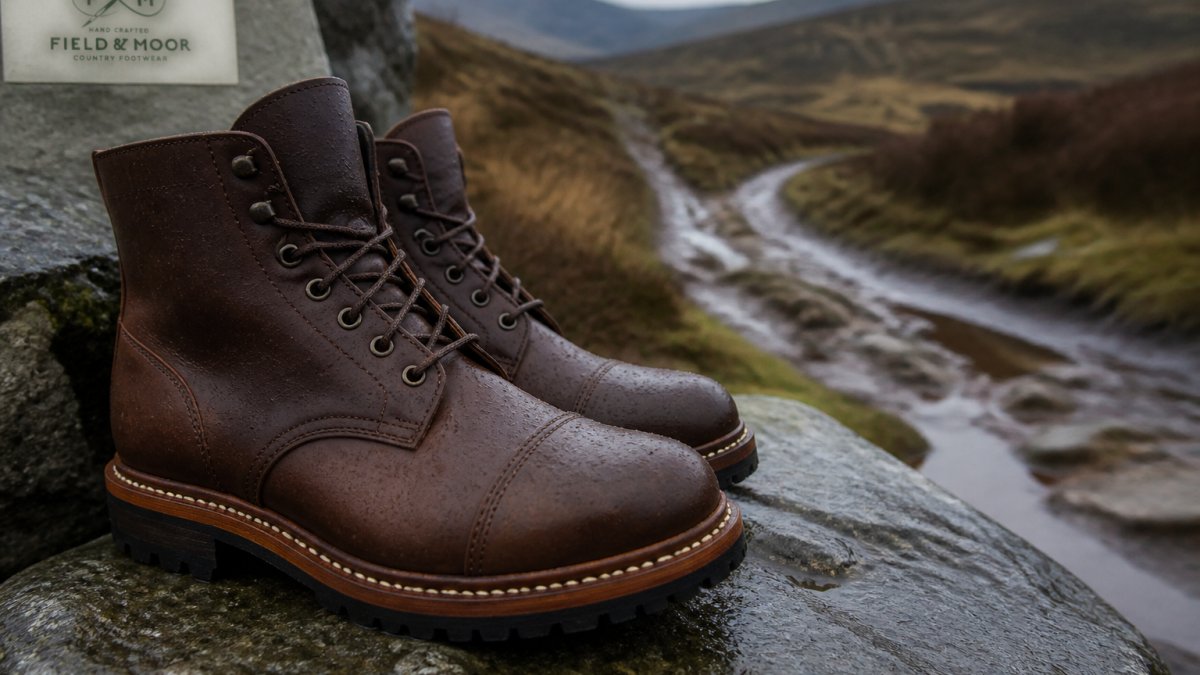
Our Osprey styles use storm-welted construction for precisely this reason, paired with a Sympatex lining and a Vibram Commando sole for grip on mud and snow. A standard welted boot is fine for town. A storm welt is what you want when the weather turns.
11 " Laced Country Boot - Greased brown Leather - Men’s - Osprey →

Durability, Lifespan and Cost Per Wear
Longevity is where the maths starts to favour welted boots, but only if you actually wear them. A cheap boot worn twice a year will outlast a welted boot worn daily, simply because it is not being used.
Cost per wear is the honest measure. Divide what you paid by the number of days you expect to wear the boot. A cheaper boot that lasts two seasons of hard use and cannot be repaired often costs more per wear than a welted boot that is resoled and worn for years.
Total Cost of Ownership, Worked Through
Most articles stop at "welted boots last longer." That is not a number. Here is the honest version, using a worked example with qualified figures.
Take two boots worn 150 days a year in wet, muddy conditions:
| Welted boot | Cheaper glued boot | |
|---|---|---|
| Upfront price | Higher | Lower |
| Expected life before first failure | Several years with care | Often one to two seasons of hard use |
| Resole cost | A fraction of the purchase price | Usually not possible |
| Replacement cost | None if resoled | Full purchase price again |
| 5-year outcome | One purchase plus one or two resoles | Two or three full replacements |
A common pattern is that the welted boot costs more in year one and less in years three, four and five. The crossover point depends on how hard you wear them and how much a local cobbler charges, but for daily or near-daily use in wet conditions, the welted boot usually wins on total spend.
For occasional wear, a few times a month on dry pavements, the maths flips. The cheaper boot never wears out, so the welted premium is never recovered.
What Actually Drives Lifespan
What drives lifespan on a welted boot:
- Leather quality: full-grain and greased leathers resist cracking far better than corrected-grain
- Care routine: cleaning and conditioning after wet, muddy use
- Rotation: letting the boot dry between wears
- Resoling: catching sole wear before it reaches the midsole
- Fit: a boot that flexes in the wrong place will fail early
- Sole choice: a soft, grippy sole wears faster than a harder compound; a Vibram Commando sole is chosen for grip, not for maximum sole life
The construction buys you the option to repair. The leather and the care routine decide whether that option is worth anything.
Evidence Versus Marketing
Be sceptical of any claim that a welted boot "lasts a lifetime." A more accurate statement is that a welted boot can last many years if the upper stays sound and you keep resoling it. Owner reports of ten or fifteen years of service usually involve rotation, regular conditioning and at least two or three resoles. Boots that fail early almost always fail because the leather cracked, not because the welt gave out.
Comfort, Break-In and Water Resistance
Welted boots are stiffer out of the box and take longer to soften than cemented ones. That is the price of a thicker sole, a stitched seam and a leather insole. The payoff is a fit that moulds to your foot and stays there.
Break-in is real, but it is not the three weeks of blisters that some buyers describe. A lot depends on the last the boot is built on and whether the leather is stiff or supple. Our boots use thick but soft leathers and a cork-filled midsole that compresses and conforms underfoot, which shortens the process.
On water resistance, construction and lining both matter. A storm welt keeps water out at the seam. A waterproof and breathable lining keeps it out through the upper. Our boots combine both, which is why they hold up to a full day out in the rain rather than a short shower.
When a Goodyear Welt Is Not Worth the Premium
A welted boot is not worth the extra money if you will not wear it enough to justify a resole, or if you will never actually send it for repair.
Be honest about your use. If the boot is a fashion item worn a few times a month on dry pavements, a cemented boot will look just as good, feel lighter, cost less and last long enough. The repairability you paid for will never be used.
Skip the premium if:
- You want maximum lightness and flexibility from day one
- You replace boots every couple of years regardless of condition
- You have no cobbler nearby and will not post boots away for repair
- The boot will see mostly dry, urban wear
- Your feet are still changing shape or size
Buy the welt if you will wear the boot hard, in wet conditions, for years, and you are willing to look after the leather and pay for a resole when the time comes.
Which Boots Suit Which Buyer
Different buyers need different things from a welted boot. Matching the construction and the style to the job is what makes the money well spent.
For serious country use, upland stalking and long days in wet grass, a storm-welted laced boot with a Vibram sole and a waterproof lining is the right call. Our Osprey in greased brown leather is built for exactly that, with a detachable gun-rest on the vamp, cork insulation and a full leather insole. It sits at £270.
For a lighter, more versatile boot that moves between the field and town, the Sparrowhawk is Goodyear welted with a leather insole and a Vibram button sole, at £150. For a Chelsea boot that works with smart-casual wear, the Merlin is welted, treble stitched and resolable, with a buckle detail and elastic gussets, at £120.
| Boot | Construction | Best For | Price |
|---|---|---|---|
| Osprey (laced country) | Storm welted | Upland, fieldsports, wet ground | £270 |
| Sparrowhawk (ladies laced) | Goodyear welted | Everyday country wear, walking | £150 |
| Merlin (ladies Chelsea) | Goodyear welted | Town and country, smart-casual | £120 |
Our wider range includes the Marsh Harrier, Eagle, Golden Eagle and Harrier in laced country styles, plus the Falcon and Owl in Chelsea boots, so there is a last and a build to suit most feet and most uses.
Frequently Asked Questions
How long do Goodyear welted boots last?
Lifespan depends on the upper, not the welt. A thick leather upper that is cleaned and conditioned regularly can stay serviceable for many years, and the welted sole can be replaced when it wears through. The welt itself can only be re-stitched a limited number of times before the insole and upper start to suffer, so a well-cared-for pair typically outlasts several pairs of cemented boots and justifies the higher upfront cost over time.
Are Goodyear welted boots comfortable for everyday wear?
They can be, once broken in. The cork layer under the footbed moulds to your foot with wear, which is why the first few weeks feel stiff and the months afterwards feel supportive. If you want a welted boot with a gentler start, look for a lighter sole unit and a full leather insole, such as the Sparrowhawk ladies boot at £150, which uses Goodyear welted construction with cork underfoot and a Vibram button sole.
Are Goodyear welted boots waterproof?
The welted seam alone is not fully waterproof, because the stitches pass through the sole and can wick water. A storm welt adds a raised lip that sheds water away from the seam, and a waterproof lining such as Sympatex does the rest. The Osprey laced country boot at £270 combines storm-welted construction with a Sympatex lining and a hydrophobic greased leather upper, so wet grass and long days out in the rain are handled.
Are Goodyear welted boots worth the money for occasional wear?
Often, no. If you wear boots a handful of times a year on dry pavements, the resole benefit never gets used and a cemented pair will do the same job for less. The value appears with regular wear: several days a week, mixed terrain, wet ground and a cobbler you trust. Below roughly twice-weekly use, the cost per wear rarely beats a cheaper boot, and the stiffness may annoy you more than the durability impresses you.
The real question is not whether Goodyear welted boots cost more, because they do. It is whether you will wear them enough to make that cost work for you. If you want boots built to be worn hard, repaired and kept for years, Field & Moor builds them with storm-welted and Goodyear welted construction, waterproof Sympatex linings and Vibram soles, in styles from the Osprey to the Merlin. Get started with Field & Moor and choose a pair made to be resoled rather than replaced.