
How to Waterproof Leather Country Boots: A Complete Guide

Table of Contents
- What You'll Need Before You Start
- How to Clean Leather Country Boots Before Waterproofing
- Mink Oil vs Leather Wax: Choosing the Right Waterproofing Agent
- Matching Your Method to the Leather Type
- Step-by-Step: How to Waterproof Leather Country Boots
- Protecting Breathability and Waterproof Membranes
- The Benefits of Merino Wool Socks with Waterproof Boots
- Common Mistakes to Avoid
- Maintenance, Re-Application, and Off-Season Storage
- Frequently Asked Questions
Last Updated: September 29, 2026
What You'll Need Before You Start
Waterproofing leather country boots works best when you gather everything first. Rushing the prep stage is the main reason treatments fail.
Here's your kit list:
- Soft horsehair brush for dust and dried mud
- Leather cleaner or saddle soap
- Warm water and a lint-free cloth
- Your chosen waterproofing agent (wax, oil, or cream)
- Application brush or sponge
- Clean rags for buffing
- Rubber gloves if you're using solvent-based products
A proper cleaning kit saves you hunting for bits mid-job. The Field & Moor Leather aftercare Boot cleaning kit covers the basics: a luxury super-soft horse hair small polishing brush, a round horse hair application brush, a soft cotton stitched edge, lint -free polishing cloth, Collonil delicate cream, and Collonil Leather gel to condition and waterproof the leather.

Work somewhere ventilated. Solvent-based products give off fumes. A garage with the door open or a covered outdoor space works well.
Check the weather. Apply treatments when rain isn't forecast for at least 24 hours. Damp conditions stop proper curing.
How to Clean Leather Country Boots Before Waterproofing
Cleaning is not optional. Waterproofing agents cannot bond to dirty leather.
Mud, dust, and old product block the pores. The treatment sits on top instead of soaking in. It flakes off within days.
Removing Mud, Dirt, and Old Product Build-Up
Start with dry boots. Wet mud pushes deeper into the grain.
- Let mud dry completely, then brush it off with a stiff brush
- Mix warm water with a small amount of leather cleaner or saddle soap
- Work the lather in with a soft brush using circular motions
- Wipe away suds with a clean damp cloth
- Let boots dry naturally, away from radiators and direct sun
Skip the heat. Radiators and hair dryers crack leather. Air drying takes longer but keeps the material supple.
For stubborn build-up, repeat the process. Old wax layers sometimes need two rounds.
Let boots dry for at least 12 hours before waterproofing. Damp leather won't absorb treatment evenly.
Mink Oil vs Leather Wax: Choosing the Right Waterproofing Agent
Mink oil softens leather and adds water resistance. Leather wax forms a harder surface barrier. The right choice depends on what you need.
Mink oil soaks deep into the grain. It conditions while it protects, which suits dry or stiff leather. It darkens light-coloured leather, sometimes by several shades.
Leather wax sits on the surface. It creates a strong water-repellent layer and adds shine. Wax suits smooth full-grain leather and boots that need to look smart.
Creams fall between the two. They condition lightly and offer moderate protection.
| Agent | Protection Level | Effect on Leather | Best For |
|---|---|---|---|
| Mink oil | High | Softens, darkens | Dry, stiff boots |
| Leather wax | High | Surface barrier, shines | Smooth full-grain |
| Creams | Medium | Light conditioning | Regular upkeep |
| Sprays | Medium | Minimal change | Nubuck, suede |
Sprays, Oils, and Creams: Pros and Cons
Sprays
- Pros: Fast, even coverage, no colour change
- Cons: Needs frequent reapplication, less durable
Oils
- Pros: Deep conditioning, strong water repellency
- Cons: Darkens leather, can soften structure over time
Creams
- Pros: Easy to apply, gentle conditioning
- Cons: Moderate protection, needs regular topping up
Matching Your Method to the Leather Type
Full-grain, nubuck, and suede each need different treatment. Using the wrong product ruins the finish. The single biggest fear buyers have is darkening expensive leather, so the rule is simple: patch test first.
Full-Grain, Nubuck, and Suede: What Each One Needs
Full-grain leather has the strongest fibres and the tightest grain. It takes wax, oil, and cream well. This is the most forgiving leather to waterproof, and it is the type most country boots use. Wax sits on the surface and buffs to a shine; oil soaks in and conditions. Both work.
Nubuck is buffed on the outer surface for a soft, velvety feel. It needs spray-on waterproofers designed for its open texture. Brushes and heavy waxes flatten the nap. Once the nap is flattened, it is very hard to raise again.
Suede has a softer, more delicate surface than nubuck. Waterproofing sprays work, but test first. Some sprays darken suede permanently, and suede has less tolerance for reapplication than nubuck.
Corrected-grain leather has a stamped or coated finish. Creams and light waxes work well here. Avoid heavy oils, which can lift the coating.
Oiled and pull-up leathers are already treated at the tannery. They need less product, not more. Over-treating them leaves a sticky surface that attracts grit.
Patch Testing to Avoid Discolouration
Darkening is the number one complaint about waterproofing leather. It is not always avoidable, but it is always predictable if you test first.
- Pick a hidden spot: the inside of the heel, behind the tongue, or under the collar.
- Apply a small amount of your chosen product with a cloth.
- Wait the full curing time stated on the label, not just until it looks dry.
- Compare the patch against untreated leather in daylight, not indoor light.
- If the shade shift is acceptable, proceed. If not, switch to a cream or spray, which darken less than oil.
General rule on darkening: oils darken most, waxes darken moderately, creams darken least, and sprays designed for nubuck and suede typically cause the smallest shift. Light tan and natural leathers show darkening far more than dark brown or black.
Reading the Care Label Before You Buy Product
Check your boots' care label or product page before choosing. It will usually state the leather type and any finish applied at the factory. If the label says "nubuck" or "suede", go straight to a spray. If it says "full-grain" or "oiled", wax or cream is safe. Field & Moor boots use thick full-grain leather.

Step-by-Step: How to Waterproof Leather Country Boots
Here's the core process. Work slowly and cover every surface.
- Clean and dry your boots completely. Follow the cleaning steps above.
- Warm the leather slightly. Body heat or a warm room softens the fibres and helps absorption. A heat gun on a low setting works, but keep it moving.
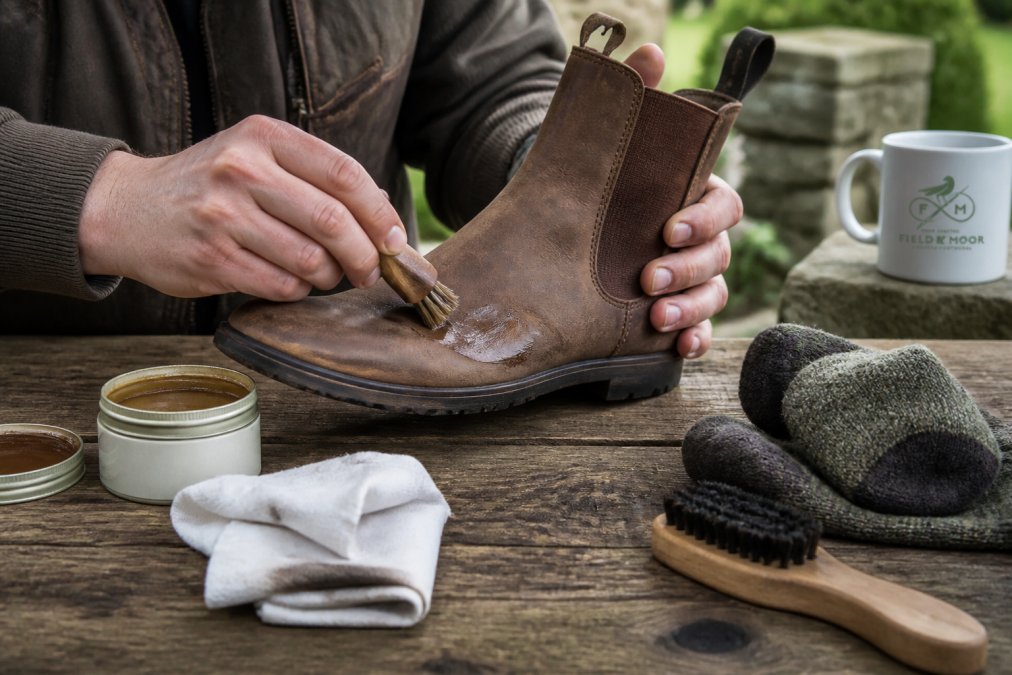
- Apply a thin, even layer. Use a brush or cloth. Work in small circles.
- Pay attention to seams and welts. Water enters at stitching lines first.
- Let the first coat absorb. Wait 20-30 minutes.
- Apply a second thin coat. Two light layers beat one heavy one.
- Buff off excess. A horsehair brush or clean cloth removes surface residue.
- Let boots cure for 24 hours. Keep them away from heat.
Heat Application and Curing Times
Heat helps wax and oil penetrate deeper. But too much heat damages leather.
Safe method: Warm the leather with a heat gun on its lowest setting, holding it 20-30 cm away. Keep the gun moving. The leather should feel warm, never hot.
Curing time: Most waxes and oils need 24 hours to fully cure. Some products need less, so check the label. Boots worn too soon shed treatment fast.
Field and Moor Leather aftercare Boot →
Drying vs curing: Drying removes moisture. Curing lets the product bond with the leather. Both matter.
Protecting Breathability and Waterproof Membranes
Waterproofing the outside can sabotage the inside if you're careless. Breathable membranes need airflow to work.
Boots with Sympatex or similar linings push sweat vapour out through the leather. Heavy wax layers block that path. Your feet stay dry from rain but soaked from sweat.
Keep these points in mind:
- Apply thin coats, not thick ones
- Avoid coating the inside of the boot
- Don't waterproof the tongue's underside
- Reapply only when water stops beading
Field & Moor boots pair Sympatex linings with full-grain leather. The lining keeps water out while letting vapour escape. A light wax layer on the outside won't block this, but heavy buildup will.
The breathability trade-off is real. Every waterproofing layer reduces airflow to some degree. Balance protection against comfort based on how you use your boots.
The Benefits of Merino Wool Socks with Waterproof Boots
Good boots deserve good socks. Merino wool manages moisture in a way cotton and synthetics can't match.
Merino fibres wick sweat away from skin and hold it in the fibre core. Your feet stay drier, even during long days out. Wool also regulates temperature, so feet stay warm in winter and cooler in summer.
Why merino works with waterproof boots:
- Wicks moisture when membranes slow vapour escape
- Naturally odour-resistant, so boots stay fresher
- Soft fibres reduce rubbing and blisters
- Insulates even when damp
House of Cheviot socks, made in the Scottish borders, pair well with country boots. Each pair is designed, knitted and finished by hand in the House of Cheviot workshop in Scottish borders. The hunting, shooting, and walking ranges suit long days in the field.
Skip cotton. It holds sweat against your skin and loses insulation when wet. That's a recipe for cold, uncomfortable feet.
Common Mistakes to Avoid
Most waterproofing failures trace back to a handful of errors. Here are the ones that cost people the most.
Skipping the clean. Treatment can't bond to dirty leather. This is the single biggest cause of poor results.
Applying to wet boots. Water blocks absorption. Always dry boots for 12+ hours first.
Using too much product. Thick layers sit on the surface and crack. Thin coats work better.
Ignoring the seams. Water enters at stitching and welts. These areas need extra attention.
Using the wrong product for the leather. Mink oil on suede is a costly mistake. Match the agent to the material.
Drying near heat. Radiators and fires crack leather and shrink stitching.
Forgetting the tongue. Water runs down the tongue and into the boot. Treat it, but avoid the underside if your boots have a membrane.
Maintenance, Re-Application, and Off-Season Storage
Waterproofing is not a one-off job. Leather needs regular care to stay protected, and the two things that shorten boot life most are skipped re-application and poor off-season storage.
Knowing When to Reapply
Do not rely on a calendar alone. Watch how water behaves on the surface.
- Beading well: protection is intact, no action needed.
- Beading weakly or patchy: the layer is thinning, reapply soon.
- Water soaking in and darkening the leather: protection has failed, reapply before the next wet wear.
For boots worn daily in wet conditions, that often means a fresh coat every few weeks. For occasional weekend wear, every two to three months is typical. The surface tells you more than the calendar does.
Routine care:
- Brush off mud after every wear, while it is dry
- Clean properly every four to six weeks in regular use
- Reapply waterproofing when beading stops
- Condition leather to stop it drying out and cracking
Off-Season Storage
Off-season storage matters more than most people think. Leather left alone for months can dry out, stiffen, and crack, and damp storage encourages mould.
Before putting boots away:
- Clean them thoroughly and let them dry fully, inside and out.
- Apply a fresh coat of waterproofing and let it cure.
- Stuff them with newspaper or insert boot trees to hold their shape.
- Store in a cool, dry place out of direct sunlight.
Avoid plastic bags. They trap moisture against the leather and encourage mould. A breathable cotton bag or an open shelf works far better. If you live somewhere humid, add a silica gel sachet to the storage area and replace it periodically.
Check them monthly. Pull boots out, inspect for mould or cracking, and air them. Mould shows as a white or grey powdery bloom; brush it off outdoors and wipe the leather with a diluted vinegar solution before reconditioning. Cracking shows as fine lines along flex points, which means the leather has dried out and needs conditioning.
Long-Term Repairability
Goodyear-welted boots like Field & Moor's Hawk Country Boot can be resoled when soles wear through. That repairability is what makes proper care worth the effort.

Frequently Asked Questions
How often should I waterproof my leather country boots?
Re-apply waterproofing every 4-6 weeks during regular wear, or more often in wet conditions. If water stops beading on the surface, it is time to clean and re-treat. Boots worn daily in mud or heavy rain may need treatment every 2-3 weeks. Always clean the leather first so the product penetrates properly. Rotating between two pairs gives each one time to dry fully and extends the life of the waterproofing.
Is mink oil safe for all types of leather boots?
Mink oil works well on smooth full-grain leather but can darken it noticeably. Avoid using it on nubuck or suede because it clogs the nap and changes the texture. For lighter leathers or those with a delicate finish, a water-based wax or cream is a safer choice than mink oil.
Can I use wax-based treatments on waterproof membranes like Sympatex?
Wax-based treatments are generally compatible with Sympatex and similar waterproof breathable membranes because they sit on the leather surface rather than blocking the membrane itself. The key is to apply thin, even coats and avoid over-saturating the leather, which can reduce breathability. Always test on a small hidden area first. If the boot has a synthetic lining, choose a product labelled safe for use with waterproof membranes.
What is the difference between water-resistant and waterproof leather?
Water-resistant leather repels light rain and splashes for a short time but will eventually soak through in sustained wet conditions. Waterproof leather, often paired with a membrane like Sympatex, has a built-in barrier that stops water entering while still allowing moisture vapour to escape. Regular waterproofing treatments boost the natural water resistance of the leather itself, but they work best on boots that already have a waterproof membrane or construction.