
Best Comfort Safari Boots for Long Days, Styled

Table of Contents
- What Makes Safari Boots Comfortable for Long Days?
- Quick Comparison: Field & Moor Safari Boots
- Field & Moor Osprey: Ladies Tan and Men's Light Brown
- Field & Moor Harrier in Tan: Versatile Performance
- Field & Moor Marsh Harrier: Rugged Water Resistance
- Field & Moor Sparrowhawk: Suede Style and Comfort
- Leather vs Suede Safari Boots: Which Material Suits You?
- How to Style Safari Boots from Bush to Lodge
- Best Boots for Long Distance Walking: What to Look For
- Choosing the Right Safari Boots for Your Adventure
- Frequently Asked Questions
Last Updated: October 3, 2026
What Makes Safari Boots Comfortable for Long Days?
The best enhanced comfort for long days of activity in stylish safari boots comes down to four mechanical principles: pressure distribution underfoot, arch and heel stabilisation, shock attenuation through the sole unit, and moisture management against the skin. Get those right and a boot will carry you through a six-hour walking safari and still look presentable at dinner.
At Field & Moor, we build every pair around that principle. Our safari boots are handcrafted in family-owned artisan factories in Spain, then finished with the kind of construction that keeps a boot comfortable in year three, not just week one.
Safari boots are a category of mid-height leather or suede footwear built for walking safaris, game drives, and country pursuits, combining ankle support with a sole designed for loose sand, gravel, and mud. The distinction matters: a boot that works on a paved trail often fails on the varied terrain you meet in the field.
Cushioning, Arch Support and Shock Absorption
A full leather insole with cork infill is the quiet workhorse of long-day comfort. Cork is a cellular material, roughly 50% air by volume, which is why it moulds to the shape of your foot over time while remaining resilient enough to spring back after each step. That combination of memory and rebound is what separates a cork footbed from a flat foam insole that compresses permanently within a season.
Cushioned insoles matter most on multi-day hiking and walking safaris, where foot fatigue builds hour by hour. An anatomical footbed spreads pressure evenly across the arch and heel rather than concentrating it at the ball of the foot.
Shock absorption lives in the sole unit. A Vibram sole with a defined lug pattern does two jobs: it absorbs impact on hard ground and grips on soft ground. The rubber compound matters as much as the tread; softer compounds grip better on rock but wear faster, while harder compounds last longer but transmit more impact.
Breathability and Moisture-Wicking Linings
Sympatex waterproof and breathable linings are the reason a leather safari boot can handle a river crossing and a hot afternoon without turning into a swamp. The membrane works by allowing water vapour molecules (which are small) to pass through while blocking liquid water droplets (which are larger). The result: sweat escapes as vapour, but rain and river water stay out.
Breathable mesh is common in lightweight construction, but for safari use we prefer a full leather lining. Leather manages moisture well because its fibrous structure wicks sweat away from the skin and releases it through the upper, resists odour because the fibres are naturally antimicrobial, and holds its shape because it moulds rather than stretches.
A quick-dry synthetic lining has its place in travel-friendly boots, but leather and suede uppers with a proper membrane strike the better balance for mixed conditions. The trade-off is weight: a full leather lining adds grams, but it also adds the durability that keeps the boot comfortable in year three rather than just week one.
Why Foot Fatigue Builds, and How to Delay It
Most walkers notice foot fatigue before they notice sore feet. The sequence is predictable: after two to three hours, the arch muscles begin to tire from constant micro-adjustment; after four to five hours, the plantar fascia, the band of tissue running from heel to toes, starts to complain; after six hours, the metatarsal heads ache from repeated impact.
The boot's role is to reduce the work your foot has to do. A supportive arch shelf means the arch muscles do not have to hold themselves up. A cushioned heel means the plantar fascia is not stretched with every step. A shock-absorbing sole means the metatarsals are not absorbing the full force of each footfall.
This is why we build every Field & Moor boot around the same foundation: a full leather insole with cork infill, a Vibram sole unit, and a Sympatex lining. The upper material changes – grained leather for the Osprey, leather and suede for the Harrier, chestnut grain for the Marsh Harrier, suede for the Sparrowhawk – but the comfort architecture underneath stays constant.

Quick Comparison: Field & Moor Safari Boots
Here is how our four core safari styles line up on the features that decide long-day comfort.
| Boot | Upper | Best For | Sole | Price |
|---|---|---|---|---|
| Osprey (Ladies Tan / Men's Light Brown | Grained hydrophobic leather | All-round field and town wear | Vibram Commando | £270-£340 |
| Harrier in Tan | Grain leather and suede | Versatile trekking and walking | Vibram | £210-£225 |
| Marsh Harrier | Chestnut grain leather | Wetland and river crossings | Vibram Commando | £225 |
| Sparrowhawk | Brown suede | Style-led travel and lodge wear | Vibram button | £184.80 |
All four share the same foundations: Goodyear or storm-welted construction, cork insulation under a leather insole, and repairable soles. What changes is the upper material and how much water resistance you need.
Field & Moor Osprey: Ladies Tan and Men's Light Brown
The Osprey is our most versatile boot and the one we would point most people toward first. It pairs a thick grained hydrophobic leather upper with a Sympatex waterproof and breathable lining, so it handles transitional weather without complaint.
The Vibram rubber Commando sole gives strong grip in slippery and snowy conditions, and the storm-welted construction adds both waterproofing and repairability. A double-sided buckle lets you adjust the fit around the ankle, which helps if you have high arches or a wider foot.
Where it earns its place on a long day: the mid-sole cork insulation regulates foot temperature, and the full leather-lined insole supports the arch over hours rather than minutes. The gun-rest on the vamp protects the boot against wear from a shotgun or a motorcycle peg, which is a small detail that matters if you use your boots for fieldsports.
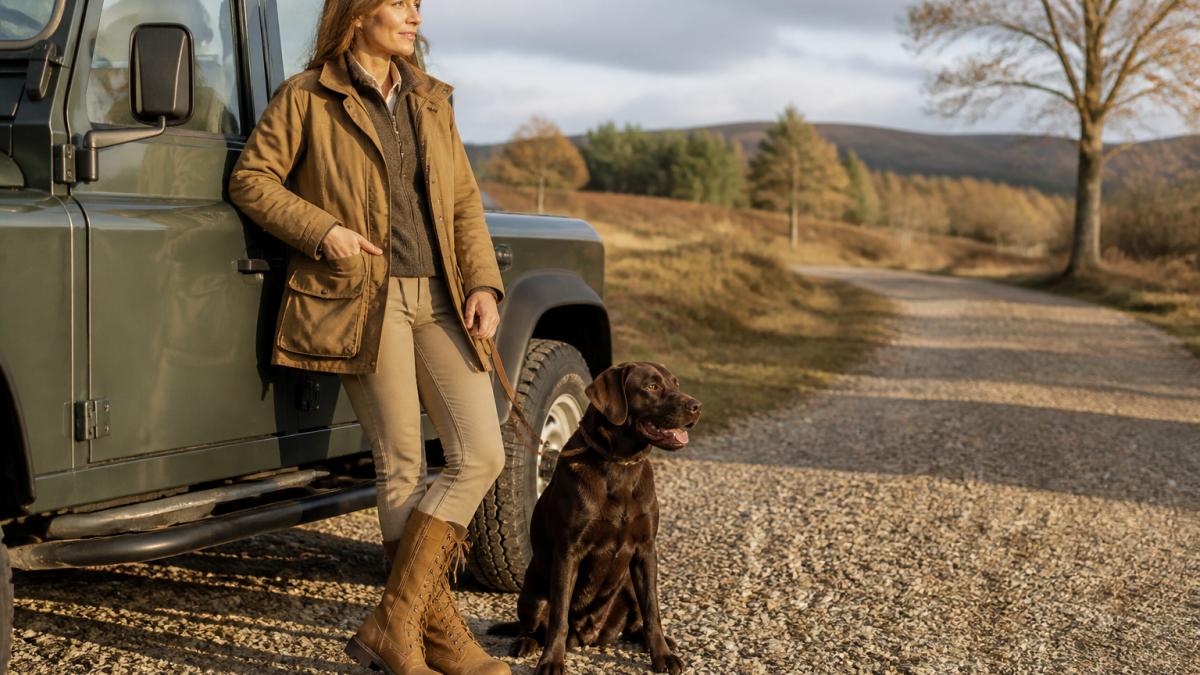
Pros and Cons
Pros:
- Adjustable double-sided buckle suits wider feet and high arches
- Storm-welted construction is fully repairable, so the boot lasts for years
- Handles both country pursuits and smart-casual town wear
Cons:
- The heaviest boot in the range, which some walkers notice on very long days
- Costs more than the Harrier and Sparrowhawk
Field & Moor Harrier in Tan: Versatile Performance
The Harrier in tan is the boot we recommend for walking safaris and trekking where weight matters. It combines a thick tan grain leather with Felefrio suede on the upper, which keeps it lighter than the Osprey while retaining full waterproofing.
A Sympatex waterproof and breathable lining sits inside, backed by a Vibram sole unit for grip on challenging terrain. Goodyear welting and treble stitching give it the strength to handle rough ground season after season, and the full leather insole with cork infill insulation delivers long-term wearability.
The lacing system uses D rings and ski hooks, which lets you lock the heel down securely. That heel stability is what prevents the foot from sliding forward on descents, a common cause of toe pain on multi-day hiking.
The men's version includes Mink oil for long-term leather care, and both versions ship with spare laces and horse hair brushes for the leather and suede.
Pros and Cons
Pros:
- Lighter than the Osprey, better suited to long-distance walking
- D rings and ski hooks give secure heel fitment on descents
- Leather and suede combination breaks in faster than full-grain alone
Cons:
- Suede panels need more careful cleaning than a full leather upper
- Less water-resistant than the Marsh Harrier in sustained rain
Field & Moor Marsh Harrier: Rugged Water Resistance
If your safari involves wetlands, river crossings, or the Okavango Delta, the Marsh Harrier is the boot to take. It stands nine inches tall, giving more ankle support and more coverage than the rest of the range.

The upper is thick hydrophobic chestnut grain leather, and the Sympatex waterproof and breathable lining adds a second layer of protection. A Vibram Commando sole provides traction in mud and snow, while storm-welted construction ensures the boot holds together over years of hard use.
Two details make a real difference in the wet. The half-bellows tongue increases waterproofing and insulates against temperature, and the full leather lining with cork in the footbed regulates heat while cradling the foot. The detachable reinforced gun-rest on the vamp protects the boot during fieldsports.
Soft chestnut leather makes this an all-day comfort boot, whether you are walking or sitting in a vehicle on a game drive.
Pros and Cons
Pros:
- Best water resistance in the range, ideal for wetland terrain
- Taller 9-inch shaft gives extra ankle support and toe protection
- Half-bellows tongue keeps water and cold out
Cons:
- Taller shaft takes longer to lace and break in
- Warmer than lower-cut boots in peak heat
Field & Moor Sparrowhawk: Suede Style and Comfort
The Sparrowhawk is the style-led option, and it is the boot we suggest for travellers who want one pair that works on the trail and at the lodge. It is made from locally sourced suede in a shade of brown that sits well with every tone of safari clothing.
Safari Boots - Ladies Marsh Harrier laced boots →
Goodyear welting holds it together, and the leather lining runs throughout for a luxury finish. Cork infill under the full leather insole provides cushioning and insulates the foot in extreme temperatures, which is exactly the property you want when the day swings from a hot morning drive to a cold evening.
The Vibram button rubber sole has a distinct heel piece and is repairable, so the boot is a long-term investment rather than a season-long purchase. It comes with a boot brush for care.
Where it falls short: suede is not the material for heavy rain or thick mud. Treat it as a dry-conditions and travel boot, and it will serve you well.
Pros and Cons
Pros:
- The most stylish option, easy to wear from bush to lodge
- Lightest and most travel-friendly of the four
- Repairable Vibram sole extends the boot's life
Cons:
- Suede needs protection and care in wet conditions
- Less ankle coverage than the Marsh Harrier
Leather vs Suede Safari Boots: Which Material Suits You?
Leather wins on weather resistance and durability; suede wins on weight, style, and how quickly it breaks in. That is the short answer.
Full-grain and grained leather is the choice for wet climates, muddy ground, and fieldsports. It resists water, takes a polish, and ages into something better looking than it started. The trade-off is weight and a break-in period.
Suede is softer, lighter, and more forgiving from the first wear. It suits dry climates, travel, and lodge wear. It needs brushing and a protective spray, and it will not shrug off a downpour the way leather does.
A leather and suede combination, like the Harrier, splits the difference. You get the strength and water resistance of leather with the lighter feel and faster break-in of suede panels.
If you are weighing up a boot for a single trip, match the material to the terrain. If you want one boot for years of mixed use, leather is the safer long-term buy.
How to Style Safari Boots from Bush to Lodge
Safari boots style best when you treat them as the anchor of a neutral, earthy outfit and let the rest of the clothing stay quiet. The boot does the talking; everything else supports it. But the real skill is making one pair of boots work across two very different settings, the dusty bush and the polished lodge, without looking like you've packed for the wrong occasion.
The principle is contrast, not compromise. A rugged boot against a clean, tailored outfit reads as deliberate. A rugged boot against more rugged clothing reads as utility. The difference is in the details: the cut of the trouser, the weight of the shirt, the sock you choose.
The Field Outfit: Function First, Style Second
For the field, pair your boots with technical walking trousers or well-cut chinos in khaki, olive, or stone. Tuck the trouser leg cleanly or let it fall over the boot shaft, depending on the cut. A straight-leg chino that breaks just above the boot's ankle collar keeps the silhouette clean without exposing the sock. Add a breathable base layer and a lightweight field jacket.
The Osprey in ladies tan or men's light brown works particularly well here because the grained hydrophobic leather takes dust and scuff without looking battered. The double-sided buckle gives a slightly more technical silhouette than a plain lace-up, which suits the field setting without tipping into hiking-boot territory.
The Lodge Outfit: Clean Lines, Quiet Colours
For the lodge, the same boots work with dark denim or tailored trousers and a linen shirt. The trick is to let the boot's texture do the work. A suede boot like the Sparrowhawk makes this transition almost effortless because suede reads as softer and more refined than grained leather; it catches the light differently and pairs naturally with linen, cotton, and lightweight wool.
If you're wearing the Harrier in tan, the leather-and-suede combination gives you the best of both worlds: enough polish for the lodge, enough durability for the trail. The tan colour sits well against navy, charcoal, and olive, which are the three most useful lodge colours.

Three Styling Rules That Hold Up
- Keep the palette to two or three earth tones so the boot is the focal point. Tan boots with olive trousers and a stone shirt is a complete outfit. Adding a fourth colour dilutes the effect.
- Match your belt to the boot leather where you can. This is the single most reliable way to make a rugged boot look intentional rather than accidental. A tan belt with tan boots, a brown belt with brown boots.
- Choose a sock that disappears under trousers in town and cushions on the trail. A merino wool sock in a colour close to your trouser works in both settings. Avoid white sports socks; they break the palette and read as athletic rather than styled.
The Transition Moment: What to Change Between Settings
You do not need to change your boots between the afternoon drive and dinner. You need to change one or two other things. Swap a technical field jacket for a linen overshirt. Swap walking trousers for tailored trousers or dark denim. Swap a baseball cap for nothing, or for a felt hat if the sun is still up. The boots stay the same.
This is where the Marsh Harrier's taller nine-inch shaft becomes a styling advantage rather than just a functional one. A taller boot with trousers worn over the shaft reads as a deliberate country style, similar to how a riding boot works in town. It is a stronger look than a low-cut boot, and it holds up in the lodge dining room as well as it does in the wetland.
Best Boots for Long Distance Walking: What to Look For
For long-distance walking, prioritise four features in this order: a supportive footbed, a shock-absorbing sole, secure heel fitment, and breathable waterproofing. Everything else is a bonus.
Arch support and cushioning come from the insole. A full leather insole with cork infill moulds to your foot and insulates against temperature, which is why we use it across the range. If you have high arches, look for a boot with an adjustable fit so you can dial in the volume.
Shock absorption is a function of the sole unit. A Vibram sole with a defined lug pattern spreads impact and grips on varied terrain, from loose gravel to wet grass.
Heel stability depends on the lacing system. D rings and ski hooks let you lock the heel in place, which prevents the forward slide that causes toe pain on long descents.
Breathability keeps foot fatigue at bay. A Sympatex lining paired with a moisture-wicking sock manages sweat far better than a non-breathable boot, and it prevents the damp, cold feeling that sets in after a river crossing.
Choosing the Right Safari Boots for Your Adventure
Match the boot to the terrain and the trip, and you will not go far wrong. For wetland safaris and river crossings, choose the Marsh Harrier for its height and water resistance. For walking safaris and trekking, the Harrier in tan is the lighter, faster option. For all-round field and town use, the Osprey is the most versatile. For style-led travel and dry conditions, the Sparrowhawk is the one to pack.
Whichever you choose, look for the same foundations: Goodyear or storm-welted construction, a cork-insulated leather insole, a Vibram sole, and a waterproof breathable lining. Those four features are what separate a boot that lasts a decade from one that lasts a season.
If you are unsure of your size, our published last measurements give you the inside length of each boot in centimetres, so you can measure your foot and choose with confidence rather than guesswork.
Frequently Asked Questions
What features make safari boots comfortable for long days of walking?
Look for cushioned insoles with arch support, breathable linings like Sympatex, and shock-absorbing midsoles such as cork infill. A secure heel fit from ski hooks and D-rings prevents slipping, while moisture-wicking materials keep feet dry. Field & Moor boots combine these elements for all-day comfort.
Are suede safari boots suitable for safari environments?
Suede can work well in dry, dusty conditions and offers a stylish look. However, it requires more care to protect against water and mud. For wetter terrains, leather boots with water-resistant treatments are more practical. Consider your destination's climate before choosing.
How do Goodyear-welted boots improve long-term comfort?
Goodyear welting creates a durable, repairable bond between upper and sole. It allows the footbed to mould to your foot over time, enhancing comfort. The construction also provides a stable platform that reduces foot fatigue during extended wear, making it ideal for multi-day adventures.
How should I break in new leather safari boots for maximum comfort?
Wear them indoors for short periods initially, then gradually increase outdoor wear. Use a leather conditioner to soften the material. Field & Moor boots feature soft leather and cork footbeds that ease the break-in process, but patience ensures a personalised fit without blisters.
What is the difference between a standard country boot and a safari boot?
Safari boots are designed for hot climates with breathable linings, moisture-wicking properties, and often taller shafts for ankle protection. Country boots may prioritise insulation and water resistance for cooler, wetter conditions. Both offer durability, but safari boots focus on ventilation and lightweight comfort.
Choosing safari boots that stay comfortable through a full day of activity, then look right at the lodge, is harder than it sounds. Field & Moor builds for exactly that balance: handcrafted construction, hydrophobic leathers, Sympatex waterproof and breathable linings, and Vibram soles across the range. Explore the Osprey in tan and light brown, the Harrier in tan, the Marsh Harrier, and the Sparrowhawk in suede, and find the pair that carries you from the trail to the table.