
How to Plan Your Pheasant Shooting Season

Quick Summary
The pheasant shooting season in the UK runs from 1 October to 1 February in England, Wales and Scotland, while Northern Ireland closes a day earlier on 31 January. Dates are set by separate legal frameworks in each nation, so check the rules for the region where you are shooting before booking.
- England, Wales, Scotland and the Isle of Man open 1 October and close 1 February.
- Northern Ireland's pheasant season runs 1 October to 31 January, one day earlier.
- Most estates run programmes between late October and late January, and booking early is advised.
- A shotgun certificate authorises possession only, not access; landowner permission is still required.
- Taking a bird outside its legal season is an offence, whatever the estate's programme says.
Table of Contents
- When the Pheasant Shooting Season Runs in the UK
- Regional Differences: England, Wales, Scotland and Northern Ireland
- Game Shooting Season Dates and the Wider Shooting Calendar
- Quarry Species and the Other Shooting Seasons to Know
- Licensing, Landowner Permission and Legal Requirements
- Pheasant Shooting Etiquette on a Driven Day
- Safety, Ethics and Responsible Shooting
- Best Footwear for Game Shooting in Changing Weather
- Planning Your Season: Kit Checklist and Next Steps
- Frequently Asked Questions
How to Plan Your Pheasant Shooting Season
Last Updated: November 9, 2026
When the Pheasant Shooting Season Runs in the UK
The pheasant shooting season in the UK runs from 1 October to 1 February in England, Wales and Scotland, a window set by the Game Act 1831 and related regional orders. Planning around those dates is the first step, because a driven day booked outside them is not legal sport. Many shooters find that the early weeks of October are quiet, with the bulk of activity arriving once the birds are fully reared and the covers are at their fullest.
The season is short, so the calendar fills quickly. Most estates run their programmes between late October and late January, and the busiest days cluster around the December and January weekends. Booking early gives you the best choice of estates and beaters, and it leaves room to adjust if the weather turns.
Think of the season as three phases rather than one block. Early season tends to suit walked-up days and smaller parties. Mid-season brings the bulk of driven shoots. Late season is often quieter, with fewer guns and more relaxed days that suit newer shooters. Matching your plans to the phase you prefer makes the season far more rewarding.
The core dates for the pheasant season in the UK are summarised below.
| Nation | Pheasant season | Note |
|---|---|---|
| England and Wales | 1 October to 1 February | Set by Game Act 1831 |
| Scotland | 1 October to 1 February | Wildlife and Countryside Act 1981 |
| Northern Ireland | 1 October to 31 January | One day earlier than rest of UK |
| Isle of Man | 1 October to 1 February | Set locally under Game Act 1882 |
Regional Differences: England, Wales, Scotland and Northern Ireland
The pheasant season is often quoted as one date for the whole country, but the legal position is set by separate frameworks in each nation, and the differences matter when you are booking days or travelling between regions.
England and Wales. Pheasant and red-legged partridge may be shot from 1 October to 1 February under the Game Act 1831, as amended. The close season exists to protect breeding birds, and the dates are fixed rather than discretionary. Grey partridge has a shorter season, closing on 1 February but opening on 1 September, and is subject to additional conservation guidance because of its declining numbers. Releases of pheasant and red-legged partridge on and around Special Areas of Conservation and Special Protection Areas require a licence from Natural England in England, and from Natural Resources Wales in Wales, following the general licensing regime introduced under the Wildlife and Countryside Act 1981. Most commercial shoots now operate under a class licence for those sites, but the estate should be able to confirm its position.
Scotland. The pheasant season runs from 1 October to 1 February under the Wildlife and Countryside Act 1981 as it applies in Scotland. The practical differences are more about release and management than the shooting dates themselves: the release of pheasants and red-legged partridges is regulated under the Wildlife and Natural Environment (Scotland) Act 2011, and anyone releasing birds must keep records and meet the code of practice for the release of gamebirds. Scotland also has a separate licensing system for controlling certain predators and for muirburn, which can affect how a shoot is managed even though it does not change the pheasant dates.
Northern Ireland. The season is set by the Game Preservation Act (Northern Ireland) 1928 and the Game (Northern Ireland) Order 1983, and pheasant may be shot from 1 October to 31 January, a day earlier than the rest of the UK. Firearms are licensed by the Police Service of Northern Ireland under a separate regime, and a visitor bringing a shotgun must apply for a visitor's permit in advance. Do not assume an English or Scottish certificate covers you here.
Isle of Man. Although not part of the UK, many shooters travel there, and the season is set locally under the Game Act 1882 (Isle of Man). Pheasant may be shot from 1 October to 1 February, but the island has its own licensing and firearms arrangements, so check before booking a ferry.
What this means in practice. If you shoot in more than one nation, keep a simple note of the opening and closing dates, the release rules for the estate you are visiting, and the firearms paperwork required. The differences are small in calendar terms but significant in legal terms, and a day taken a day outside the season is an offence regardless of what the estate's programme says. Ask your host which nation's rules apply and whether any site-specific licence is in place.
Watch out: a shoot advertising a 'January 31' day in Northern Ireland is legal, but the same date in England is inside the season only until 1 February, the two dates are not interchangeable, and a booking made on the wrong assumption can put you on the wrong side of the law.
Game Shooting Season Dates and the Wider Shooting Calendar
Pheasant is only one part of the game shooting year. The wider calendar includes partridge from 1 September to 1 February in England and Wales, grouse from 12 August to 10 December in the UK, and woodcock and snipe on their own schedules. Planning the whole year helps you spread costs, keep your skills sharp and avoid gaps in your diary.
A useful approach is to map out the season on a single calendar. Mark the opening dates for each species, then add estate bookings, travel time and any days you need for kit maintenance. Patterns tend to emerge quickly, and you will see which months are crowded and which offer quieter opportunities.
Keep in mind that weather can shift the practical season. A wet autumn may make certain covers unworkable, and a hard frost can change how birds hold. Build a little flexibility into your plans so a cancelled day does not derail the whole year. Adapting to these sudden temperature drops requires careful preparation, so reviewing cold weather hunting tips will ensure your canine companions remain both comfortable and effective when the mercury plummets.
Quarry Species and the Other Shooting Seasons to Know
Alongside pheasant and partridge, many shooters pursue wildfowl such as duck and geese, along with woodcock and snipe. Each has its own legal season, bag limits and habitat requirements, and the rules are set out in UK legislation and regional wildlife guidance. Confirm the species and dates before any day out, since taking a bird outside its season is an offence.
Quarry choice also shapes the kit and the skills you need. Walked-up days after snipe demand a different pace and fitness level than a driven pheasant day. Think about which species you enjoy most and build your season around them.
Licensing, Landowner Permission and Legal Requirements
This is the section most date-focused guides skip, and it is where new shooters come unstuck. The legal requirements fall into four areas: firearms certification, landowner permission, insurance, and species-specific licences.
Shotgun certification. In England, Wales and Scotland, anyone possessing a shotgun must hold a shotgun certificate issued by the police under the Firearms Act 1968 (Firearms Act 1968). A shotgun certificate is separate from a firearm certificate, which is required for rifles; a shotgun certificate covers smooth-bore guns with a barrel of at least 24 inches. Applicants must be 15 or over to hold a certificate in their own right, and under-15s may use a shotgun only under supervision. The application goes to the local police force, requires referees, a medical declaration and secure storage, and can take several months, so apply well before the season. Certificates last five years and must be renewed (Shotgun and firearm certificates). In Northern Ireland, the regime is different: shotguns are licensed by the Police Service of Northern Ireland under the Firearms (Northern Ireland) Order 2004, and visitors need a visitor's permit.
Visitors from abroad. If you are travelling to shoot, you will generally need a visitor's shotgun permit or to be accompanied by a certificate holder, depending on the nation. The police force for the area you are visiting issues these, and applications should be made weeks in advance. An estate can usually advise on the process but cannot issue the permit for you.
Landowner permission. Shooting on any land requires the permission of the person who holds the sporting rights, which is not always the same as the landowner. Most guns shoot as a guest of an estate, a syndicate or a club, and the booking confirmation is the permission. Never assume a right of access: the Countryside and Rights of Way Act 2000 gives a right to roam on open country and registered common land, but that right expressly does not include shooting. A permission to walk is not a permission to shoot.
Insurance. Third-party public liability insurance is not a legal requirement for every shooter, but it is a condition of membership of most shooting organisations and of most estate bookings. Membership of a recognised shooting body typically includes cover, and estates will ask for evidence. Check the limit and whether it covers driven days, walked-up days and guests.
Species and site licences. Some activities need a specific licence rather than general permission: releasing gamebirds on or near protected sites, controlling certain predators, and using certain traps all fall under licensing regimes administered by Natural England, Natural Resources Wales, NatureScot or the Northern Ireland Environment Agency. The estate normally holds these, but as a gun you should be comfortable asking whether they are in place.
A practical pre-season checklist. Confirm your certificate is current and your storage is compliant; check your insurance cover and carry proof; confirm the estate's permission and any site licence; and, if travelling between nations, check the visitor permit rules. A short email to the host covering these four points prevents almost every problem that arises on the day.
Watch out: a shotgun certificate is not a licence to shoot anywhere, it authorises possession, not access, and carrying a gun onto land without the sporting rights holder's permission is a trespass and potentially an offence even with a valid certificate.
Pheasant Shooting Etiquette on a Driven Day
Good etiquette is what keeps guests invited back. Arrive on time, introduce yourself to the other guns and the keepers, and follow the shoot captain's instructions without question. Safety comes first, so keep your gun broken and pointed safely whenever you are not in position.
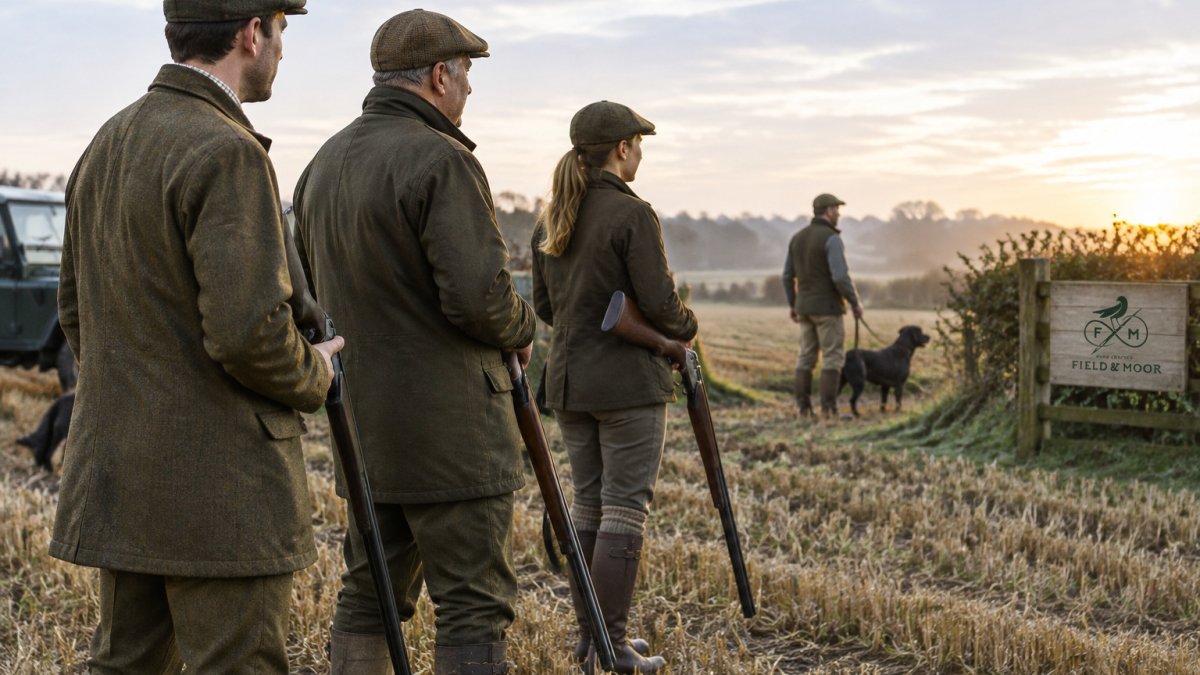
Respect the beaters and pickers-up, who work hard to make the day run smoothly. Thank them, avoid shooting at birds that are out of range, and take only the birds you are sure of. Many experienced guns find that a calm, unhurried approach earns more respect than any single shot.
Finish the day by thanking the host and keepers, and settle any payments promptly. Small courtesies like these are remembered long after the season ends.
Safety, Ethics and Responsible Shooting
Safety is non-negotiable. Always treat a gun as loaded, keep the muzzle pointed in a safe direction, and be certain of your target and what lies beyond it. Wear appropriate eye and ear protection, and never shoot at birds you cannot identify or that are too far away for a clean, humane kill.
Ethical shooting means aiming for a quick, clean kill and retrieving every bird you hit. Wounded game causes suffering and wastes a resource, so take your time and shoot within your ability. Keep your gun well maintained and your shooting technique consistent, since a faulty gun or a rushed shot is where most problems start.
Responsible shooting also means respecting the countryside. Follow the Countryside Code, close gates, keep dogs under control and leave land as you found it. Good conduct protects the sport's reputation and keeps access open for everyone.
Best Footwear for Game Shooting in Changing Weather
Footwear can make or break a shooting day. Pheasant covers are often wet, muddy and uneven, and you may walk several miles between pegs. A good boot should be fully waterproof, breathable enough to stop your feet overheating, and supportive enough to manage uneven ground all day.
Field & Moor makes handcrafted boots in family-owned artisan factories in Spain, using Goodyear and storm-welted construction, waterproof Sympatex linings and rugged Vibram soles. Their fully waterproof and breathable boots are built for wet, changeable shoot days. For guidance on picking the right pair for the job, see choosing boots for pheasant shooting. Their range is built for fieldsports and country pursuits, so it suits the conditions you will face on a driven day.
Pair your boots with the right socks. Field & Moor's House of Cheviot range is knitted by hand in the Scottish Borders, and their merino-blend shooting socks, such as the Walnut Shooting and Country socks, are designed to keep feet comfortable through long days. Wash them on a wool-friendly setting and air dry them flat to keep their shape.
Break in new boots well before the season opens. A common mistake is wearing a new pair for the first time on a demanding shoot. Wear them around the house and on short walks first.
Planning Your Season: Kit Checklist and Next Steps
A well-planned season starts with a clear kit list. Check your shotgun certificate and gun maintenance, then gather your cartridges, eye and ear protection, a game bag and a waterproof layer. Add a spare pair of socks and a flask, since a long day outdoors rewards preparation.
For footwear, consider a waterproof, breathable country boot from the Field & Moor range. Pair it with well-fitting merino-blend socks from the House of Cheviot range, such as the Tayside in Mulberry or the yellow and orange mix, to keep your feet comfortable.
Start by listing your target dates, the estates you want to book and the kit you still need. Book early, confirm permissions in writing and give yourself time to break in new footwear. Field & Moor's boots and House of Cheviot socks are designed for durability.
Frequently Asked Questions
When does the pheasant shooting season start and end?
In the UK, the pheasant shooting season generally runs from 1 October to 1 February in England, Wales and Northern Ireland. In Scotland the cut-off differs in some areas, so always check the local rules where you plan to shoot. Cock pheasants are often the only birds shot at the start of the season, with hens taken later once the breeding season is over. Landowners and shoots may set their own dates within the legal framework, so confirm the specific programme before booking a day.
Is pheasant shooting legal all year round?
No. Pheasants are a quarry species with a defined open season, and shooting outside that period is not permitted. Outside the season the birds are protected during breeding and rearing, and shooting them would be an offence. Anyone taking part should confirm the open dates for their region and the species involved before going out, as the rules are set out in UK game legislation and vary by nation.
Are there different shooting season dates in Scotland compared to the rest of the country?
Yes, there can be differences. Scotland's game laws are set separately from England and Wales, and the closing dates for some species and areas differ. Northern Ireland also has its own arrangements. Because the statutory dates vary by region and by species, check the current legal dates for the country where you are shooting rather than relying on a single UK-wide calendar.
What equipment is essential for a day in the field?
A good day in the field starts with a licensed firearm and cartridges suited to the quarry, plus eye and ear protection. Practical extras include a shooting bag, cartridge belt, a flask, and waterproof, warm layers. Footwear matters most on wet ground: waterproof boots with a grippy sole will keep you comfortable through a full day of walking.
