
Why Wear Merino Wool Socks for Stalking: A 2026 Guide

Table of Contents
- Why Merino Wool Socks Beat Cotton on the Stalk
- How Merino Regulates Temperature and Moisture
- Choosing the Best Socks for Stalking
- Stalking Socks for All-Day Wear
- How to Prevent Blisters in Walking Socks
- Common Mistakes When Buying Stalking Socks
- How to Wash Merino Wool Socks
- Conclusion: A Small Investment That Transforms Your Day
- Frequently Asked Questions
Last Updated: October 9, 2026
Why Merino Wool Socks Beat Cotton on the Stalk
If you have ever ended a day on the hill with cold, damp feet, the sock was probably the problem, not the boot. Knowing why to wear merino wool socks for stalking comes down to one simple fact: merino manages moisture while cotton holds it against your skin. At Field & Moor, the sock is the part most people overlook.
Cotton is comfortable for about an hour. Then it soaks up sweat, loses its shape, and starts to rub.
Merino behaves differently. The fibre pulls moisture away from your skin and holds it in the core of the yarn, so the surface next to your foot stays drier for longer. It also keeps trapping air when damp, which is what holds warmth in.
That matters on a stalk, where you alternate between hard walking and long, still waits.
- Cotton holds sweat against the skin
- Merino moves moisture into the fibre
- Damp merino still insulates
- Damp cotton pulls heat away fast
Get this layer right and everything above it works better.
How Merino Regulates Temperature and Moisture
Merino wool is a natural fibre that absorbs moisture vapour into the inside of each fibre while staying dry to the touch on the surface. That is the whole trick, and it is why the same pair works on a mild September walk and a frosty December morning. This inherent ability to regulate temperature and humidity remains the gold standard for any moisture wicking gear intended to keep you comfortable during long hours in the field.
Here is what is happening under your boot:
- The fibre wicks sweat away from skin
- Moisture sits inside the yarn, not on your foot
- Air pockets in the crimped fibre trap warmth
- The wool releases moisture as you move and warm up
This is also why merino resists odour. Bacteria need a damp, warm surface to multiply, and a drier sock gives them far less to work with. On a multi-day trip, that means fewer pairs in the bag.
Most House of Cheviot socks use an 85% merino wool and acrylic blend, with 10% nylon reinforcement and 5% Lycra for fit. The nylon adds wear resistance at the heel and toe. The Lycra keeps the sock from sliding down inside the boot.
That blend matters. Pure wool is soft but wears through quickly at pressure points. A small amount of nylon fixes that without losing the benefits.
Choosing the Best Socks for Stalking
The best socks for stalking are cushioned merino blends that match your boot, your terrain and the season. Thickness is not a measure of quality; it is a measure of fit.
Match the sock to the boot, not to the calendar.
A thin sock in a roomy boot will bunch and rub. A thick sock in a snug boot will compress your foot and cut circulation, which makes cold feet worse, not better. If you are between sizes, take the sock you plan to wear when you try boots on.
For most stalking, a mid-weight cushioned sock is the sensible default. It gives enough padding under the ball of the foot for long walks and enough warmth for a static wait.
Cushioning, Height and Fit
Cushioning belongs under the heel and the ball of the foot, where the impact happens. It does not belong everywhere, because too much bulk in the wrong place creates pressure points.
Height is a practical choice:
- Ankle socks suit dry, mild days and short walks
- Mid-calf socks protect against boot rub and brambles
- Knee-high socks add warmth and stay put under gaiters
Fit should be snug but never tight. If you can see a deep ridge pressed into your calf at the end of the day, the sock is too small or the cuff is too narrow.
Stalking Socks for All-Day Wear
An all-day sock has one job: to still feel comfortable at hour eight. That means it must hold its shape, stay up, and not bunch under the arch after a few miles.
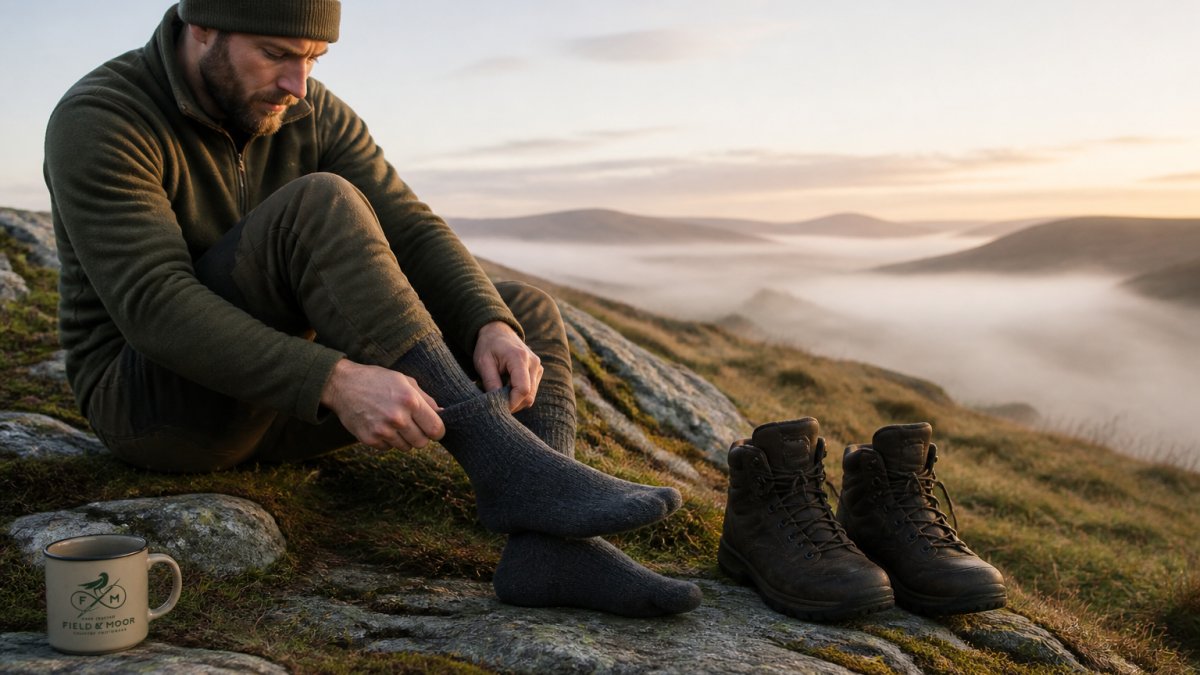
Look for a sock with a defined heel pocket and a shaped foot. A tube-shaped sock will rotate inside the boot, and rotation is what starts a blister.
House of Cheviot makes socks specifically for this kind of use. The Harris in charcoal is a good example of a plain country sock built for long days out, and it works as well with smart trousers as it does with breeks. The Men's Country and hiking house of cheviot technical socks - Glen in Charcoal new is the lighter option for warmer days and faster walking.

For anyone building a small rotation, the styles worth knowing are:
- Men's patterned: Tayside, Fenwick
- Men's plain: Rannoch, Harris, Kyle, Lomond
- Ladies patterned: Lady Katrine, Lady Fairisle
- Ladies plain: Lady Rannoch, Lady glenmore
Field & Moor stocks the Lady Glen in dark olive and the Harris in charcoal, both knitted and hand finished in Scotland. We also offer the Lady Glen House of Cheviot Country and hiking socks - Navy and the Men's Country and hiking house of cheviot technical socks - Glen in Charcoal new.


How to Prevent Blisters in Walking Socks
Blisters come from friction, moisture and heat acting together. Remove any one of the three and the blister usually does not form. Socks do most of that work.
Lady Glen House of Cheviot Country and hiking socks - Dark Olive →
Friction is the direct cause. Moisture makes skin softer and more likely to shear. Heat speeds the whole process up. A damp cotton sock delivers all three at once.
So the fix is a system, not a single product:
- Wear a merino blend that moves moisture away
- Make sure the sock fits without wrinkles
- Lace boots firmly so the heel does not lift
- Break boots in before a long day
- Carry a spare pair for wet days
That last point is the one people skip. If your boots flood, changing socks at lunch can save the afternoon.
If you already feel a hot spot, stop and deal with it. A plaster applied early is worth more than any sock. According to NHS guidance on blisters, you should keep the area clean and covered, and avoid popping a blister because of the infection risk.
Common Mistakes When Buying Stalking Socks
Most sock problems start in the shop, not on the hill. The wrong size, the wrong weight or the wrong fibre will undo a good boot every time.
The most common error is buying socks to match a boot size rather than a foot shape. Sock sizing is often a range, and a wide foot can sit at the top of one range and the bottom of the next.
Other mistakes we see regularly:
- Choosing cotton because it feels soft in the shop
- Buying one thick pair for every season
- Ignoring the heel pocket and buying tube socks
- Washing wool at high heat and shrinking it
- Wearing the same pair two days running
There is also a quiet one: assuming a more expensive boot will fix cold feet. It will not, if the sock underneath is holding water.
If you want a second opinion on fibre performance, The Woolmark Company's guide to merino wool explains how the fibre handles moisture and temperature, and it is a useful check against marketing claims.
How to Wash Merino Wool Socks
Merino socks last for years if you wash them properly, and shrink in one hot cycle if you do not. The rules are short and worth following exactly.
House of Cheviot gives clear instructions on every pair:
- Turn the socks inside out before washing
- Use a wool-friendly detergent
- Wash at 30 degrees on a wool cycle
- Do not tumble dry
- Lay flat to air dry
The inside-out step matters more than it sounds. It lets the detergent reach the skin-side fibres where sweat and oils collect, and it protects the outer surface from pilling against other items in the drum.
Skip fabric softener. It coats the fibre and reduces the sock's ability to move moisture, which undoes the reason you bought merino in the first place.
A simple routine keeps a small rotation going for years:
| Task | How Often | Why It Matters |
|---|---|---|
| Air socks after a day out | Every wear | Dries moisture, reduces odour |
| Wash inside out at 30 degrees | Every 1-2 wears | Cleans skin-side fibres safely |
| Lay flat to dry | After every wash | Prevents stretch and shrink |
| Check heels and toes | Monthly | Spots thin spots before a hole |
Two or three pairs in rotation will outlast six pairs worn and washed carelessly.
Conclusion: A Small Investment That Transforms Your Day
Cold, wet feet end more days out early than bad weather does, and the cause is almost always the layer closest to your skin. A merino blend moves moisture away, holds warmth when damp and keeps its shape through a long walk and a long wait. It is the cheapest change you can make to a day on the hill.
At Field & Moor, we stock House of Cheviot socks knitted and hand finished in the Scottish borders, alongside our handcrafted country boots built on Goodyear and storm-welted construction with waterproof Sympatex linings. Pair the right sock with the right boot and the whole day changes.
Get started with Field & Moor and give your feet the layer they have been missing.
Frequently Asked Questions
Why are merino wool socks good for stalking?
Merino wool fibres trap air to insulate while wicking moisture away from skin, so feet stay warm without overheating during long periods of stillness followed by bursts of walking. Unlike cotton, merino keeps insulating even when damp, which matters when you are standing in wet heather for hours. It also resists odour naturally, so a pair lasts multiple days on a trip.
Do merino wool socks keep your feet warm when wet?
Yes. Merino can absorb a significant amount of moisture vapour before feeling damp, and its crimped fibres continue trapping insulating air even when saturated. That is the key difference from cotton, which collapses and conducts heat away once wet. A merino blend sock under a waterproof boot keeps feet comfortable through rain, bog, and river crossings.
How thick should stalking socks be?
Match thickness to boot volume and season. A mid-weight cushioned sock suits most three-season stalking, filling the boot without compressing the foot. In deep winter, a heavier sock adds insulation but needs a roomier boot to avoid restricting circulation. If your boots fit snugly, a thinner merino sock prevents pressure points that lead to blisters.
How should you care for merino wool socks?
Turn them inside out and machine wash at 30 degrees on a wool-friendly cycle using a wool detergent. Never tumble dry, as heat shrinks and felts the fibres. Lay flat to air dry instead. Avoid fabric softener, which coats the fibres and reduces wicking. Treated well, a quality merino blend sock holds its shape and cushioning for years.