
How to Choose the Best Country Socks for Hiking Boots

Last Updated: November 13, 2026
Quick Summary
The best country socks for hiking boots match your boot's volume, your terrain and the length of your day, so look for a merino wool blend with cushioning that fills the boot without crowding your toes. A mid-length cushioned sock that clears the boot collar, such as the men's Ben Trek in charcoal at £18.70, suits most walkers.
- Fit boots with the socks you will actually wear, as volume can change by roughly half a size.
- Choose a boot-length or crew sock that rises a few centimetres above the boot line.
- A House of Cheviot sock uses 85% merino wool and acrylic, 10% nylon and 5% Lycra.
- Wash socks at 30 degrees or below and lay them flat to air dry, never tumble dry.
- The Scarba at £16.80 is the value choice for country walking.
Table of Contents
- Why the Right Sock Matters as Much as the Boot
- How We Selected the Best Walking Socks
- Quick Comparison: Country Socks for Hiking Boots
- Merino Wool Hiking Socks and Other Materials That Perform
- Hiking Sock Thickness: Matching Cushioning to Your Boots
- Sock Height and Boot Coverage: Crew, Boot-Length and Knee-Length
- How to Prevent Blisters in Hiking Boots
- Traditional Country Socks vs Technical Hiking Socks
- Caring for Your Socks to Extend Their Lifespan
- Building Your Field & Moor Sock Collection
- Frequently Asked Questions
Why the Right Sock Matters as Much as the Boot
The best country socks for hiking boots are the ones that match your boot's volume, your terrain, and the length of your day. Get that match right and a good pair of boots becomes genuinely comfortable. Get it wrong and even a perfectly fitted boot will rub, overheat, or leave you nursing hot spots by mid-afternoon.
People often invest in a well-made boot, then pull on a thin everyday sock and wonder why their feet suffer. The boot is only half the system. The sock controls friction, moisture, and temperature, and those three factors decide whether a long day on the moor ends in comfort or in blisters.
Below, we'll show you exactly how to choose country socks for hiking boots, from fibre and cushioning to height and care, and which House of Cheviot pairs we rate for rural walking.
How We Selected the Best Walking Socks
Our selection starts with fibre, not colour. A walking sock has to manage moisture and regulate temperature across a full day outdoors, so we looked first for merino wool blends, which hold warmth when damp and breathe well in milder weather.
From there we judged four things: cushioning underfoot, fit at the ankle and instep, seam construction, and how the sock performs inside a boot rather than on a shop shelf. Socks knitted and finished in the Scottish borders are a strong fit for country use.
We also weighed practical longevity. A sock that pills or loses shape after a season is a false economy. If you want the fuller framework behind these judgements, our guide on how to choose country walking socks walks through the same criteria in more depth.
Quick Comparison: Country Socks for Hiking Boots
Here is how our House of Cheviot range lines up for walking and hiking use. The House of Cheviot socks in this comparison are built from an 85% merino wool and acrylic blend with 10% nylon and 5% Lycra, though exact fibre mixes vary by listing.
| Sock | Price | Height | Best For |
|---|---|---|---|
| Men's Ben Trek, Charcoal | £18.70 | Mid-length | All-day hiking and trekking |
| Men's Ben Trek, Denim | £18.70 | Short | Warmer days, low boots |
| Ladies Ben Trek, Fuchsia | £18.70 | Mid-length | Female walkers wanting cushioning |
| Ladies Ben Trek, Denim | £29.75 | Mid-length | Cushioned comfort, cooler tones |
| Lady Glen, Dark Olive / Navy | £22.00 | Mid-length | Shooting and country wear |
| Scarba, Brick Red / Ochre | £16.80 | Mid-length | Value country walking |
| Harris, Charcoal | £32.20 | Mid-length | Stalking and smarter country dress |
| Tayside, Spruce | £40.80 | Mid-length | Shooting, hunting and fishing |
Price
Merino Wool Hiking Socks and Other Materials That Perform
Merino wool is a strong fibre for walking socks because it helps regulate temperature. It keeps feet warm in winter and cooler in summer, which is why a good merino blend works all year round rather than just in cold weather.
The blend matters as much as the wool. Pure wool alone would wear through quickly, so our socks add nylon for reinforcement and a touch of Lycra to hold shape at the ankle and instep. That combination gives you warmth, breathability and durability in one package.
For a closer look at why wool performs so well in the field, read our guide on why merino wool socks suit stalking.
Hiking Sock Thickness: Matching Cushioning to Your Boots
Hiking sock thickness should fill the space inside your boot without crowding your toes. Too thin and you get friction; too thick and the boot becomes tight, which restricts circulation and causes its own problems.
The cushioned foot across the Ben Trek range is designed to reduce fatigue. That cushioning also takes up volume, so it pairs best with a boot you've fitted with a mid-weight sock in mind.
If your boots are snug, choose a lighter sock rather than sizing up the boot. If they feel roomy, a fuller cushion will close the gap and stop your foot sliding. The aim is a firm, even hold with no pressure points and room to wiggle your toes.
Sock Height and Boot Coverage: Crew, Boot-Length and Knee-Length
Sock height should clear the top of your boot so the boot's collar never rubs directly against bare skin. For most hiking boots, that means a boot-length or crew sock that rises a few centimetres above the boot line.
Knee-length socks suit taller boots and traditional country dress, and they stay put during long days of walking. Shorter crew socks work well with low-cut walking shoes in summer but leave more ankle exposed to grit and vegetation.
Match height to the boot, not to fashion. A short sock in a tall boot is one of the most common causes of a raw, rubbed ankle. Our Ben Trek socks sit at a mid-length that clears most hiking boot collars comfortably.
How to Prevent Blisters in Hiking Boots
Blisters are a mechanical problem before they are a comfort problem. Three factors have to line up: friction between skin and sock, moisture that softens the skin and raises its friction coefficient, and heat that keeps the skin damp. Remove any one of the three and a hot spot rarely becomes a blister. The right sock tackles all three at once, which is why a snug merino blend is the first line of defence rather than a thick sock pulled on "for cushion".
Country walking adds specific friction scenarios that a generic hiking guide tends to miss. Estate tracks and field margins mean repeated side-slope cambering, which loads the inside edge of the foot and the little toe. Muddy gateways and stiles force short, twisting steps that shear the heel inside the boot. Long grass and heather soak the sock at ankle height, so moisture wicks down into the boot rather than away from it. Each of these produces hot spots in different places, and the sock fit has to account for them.
Work through these checks before and during a walk:
- Fit boots with the socks you will actually wear on the day, not thin everyday socks. Boot volume changes by roughly half a size between a thin cotton sock and a cushioned merino boot sock, which is enough to turn a good fit into a rubbing one.
- Check the seam. A flat toe seam and a smooth heel cup matter more inside a stiff country boot than inside a trainer, because the boot holds the sock in place and any ridge is pressed against the skin for hours.
- Keep the skin dry. Change socks at lunch on wet days; a damp merino sock still insulates, but it loses the friction-reducing surface that dry wool provides.
- Break boots in gradually on shorter walks before a full day on the moor, and wear the same sock thickness you plan to use.
- Stop at the first hot spot. A two-minute sock adjustment or a piece of tape now is worth more than an hour of gritted teeth later.
A common mistake is layering two thick socks to "add cushion". That usually increases shear between the two layers and tightens the boot across the instep, which restricts circulation and makes cold, damp feet more likely. One well-fitted cushioned sock beats two bulky ones in almost every country scenario. A thin liner sock under a boot sock can help if you are prone to heel shear, but only if the boot still fits properly with both layers on.
Watch out: a sock that feels fine on the shop floor can still rub once it is wet and loaded. Test any new pair on a two-hour walk in mixed conditions before trusting it on a full day.
For a deeper look at breaking in stiff leather without the misery, see our guide on preventing blisters when breaking in new leather boots.
Traditional Country Socks vs Technical Hiking Socks
Most buying guides treat traditional country socks and technical hiking socks as different categories and never put them side by side. That is the gap worth closing, because the two styles make genuinely different trade-offs and the right choice depends on how you walk, not on which looks smarter.
The core construction is closer than the marketing suggests. Both rely on wool for warmth and moisture management, both use a nylon or polyamide content for reinforcement, and both add an elastane fibre to hold shape at the ankle and instep. A House of Cheviot country sock at 85% merino, 10% nylon and 5% Lycra sits in the same technical territory as many walking-specific socks. The differences show up in five practical areas:
Cushioning. Technical hiking socks often use zoned cushioning maps: thicker terry under the heel and ball, thinner over the instep to reduce bulk. Traditional country socks tend to use an even cushioned foot, which is comfortable but takes up more volume inside the boot. If your boots are snug, a zoned technical sock may fit better; if they are roomy, the fuller country cushion closes the gap.
Drying time. Technical socks with a higher synthetic content dry faster overnight, which matters on multi-day trips or wet bothy stays. A high-merino country sock holds more water and takes longer to dry, though it stays warmer while damp. For day walks from a dry base, this difference rarely matters; for back-to-back wet days, it does.
Durability. Reinforced heel and toe panels on technical socks resist abrasion from grit and boot linings. Traditional country socks rely on the wool-nylon blend and a denser knit. In practice, a well-made merino country sock lasts comparably on soft ground but shows wear faster on rocky, abrasive terrain.
Boot fit and volume. A thicker country sock can change how a boot fits by roughly half a size. Technical socks are often graded by cushioning level so you can match them to boot volume more precisely. Neither is better; the point is to fit the boot with the sock you intend to wear.
Styling and versatility. Country socks carry richer colourways and a smarter finish that suits shooting, estate work and town wear as well as the hill. Technical socks lean toward bright panels and aggressive graphics that look out of place with tweed and field attire.
Our view is that a well-made merino country sock covers both briefs for most rural walking. The Harris in Charcoal can be ideal for formal wear as well as casual use. The trade-off is drying time and zoned cushioning: if you walk multi-day routes in persistent wet, a technical sock has the edge; for day walks, estate work and mixed country use, the traditional sock is the more versatile choice.
Watch out: do not assume a thicker country sock will improve a boot that already fits well. Adding volume can crowd the toes and cause the very rubbing you were trying to prevent.
Caring for Your Socks to Extend Their Lifespan
Wash these socks at 30 degrees or below with a wool-friendly detergent, then lay them flat to air dry. Do not tumble dry, as this can cause shrinkage because of the high wool content.
Turn socks inside out before washing to clean the skin-side fibres properly. A gentle spin or hand wash is kinder than a heavy cycle.
Store them folded and dry, away from damp. If you're thinking about longevity across a whole collection, our guide to durable country socks that last covers what to look for and how to make each pair go further.
Building Your Field & Moor Sock Collection
A practical collection covers three jobs: everyday walking, colder or wetter days, and smarter country occasions. Start with a cushioned mid-length pair for general hiking, add a short pair for warm weather, and keep a smarter wool sock for shooting and town.
Our pick for most walkers is the men's Ben Trek hiking socks in charcoal at £18.70. The cushioned foot, ventilated ribs and Lycra support at the ankle make it a comfortable all-day sock, and the merino blend regulates temperature across seasons.
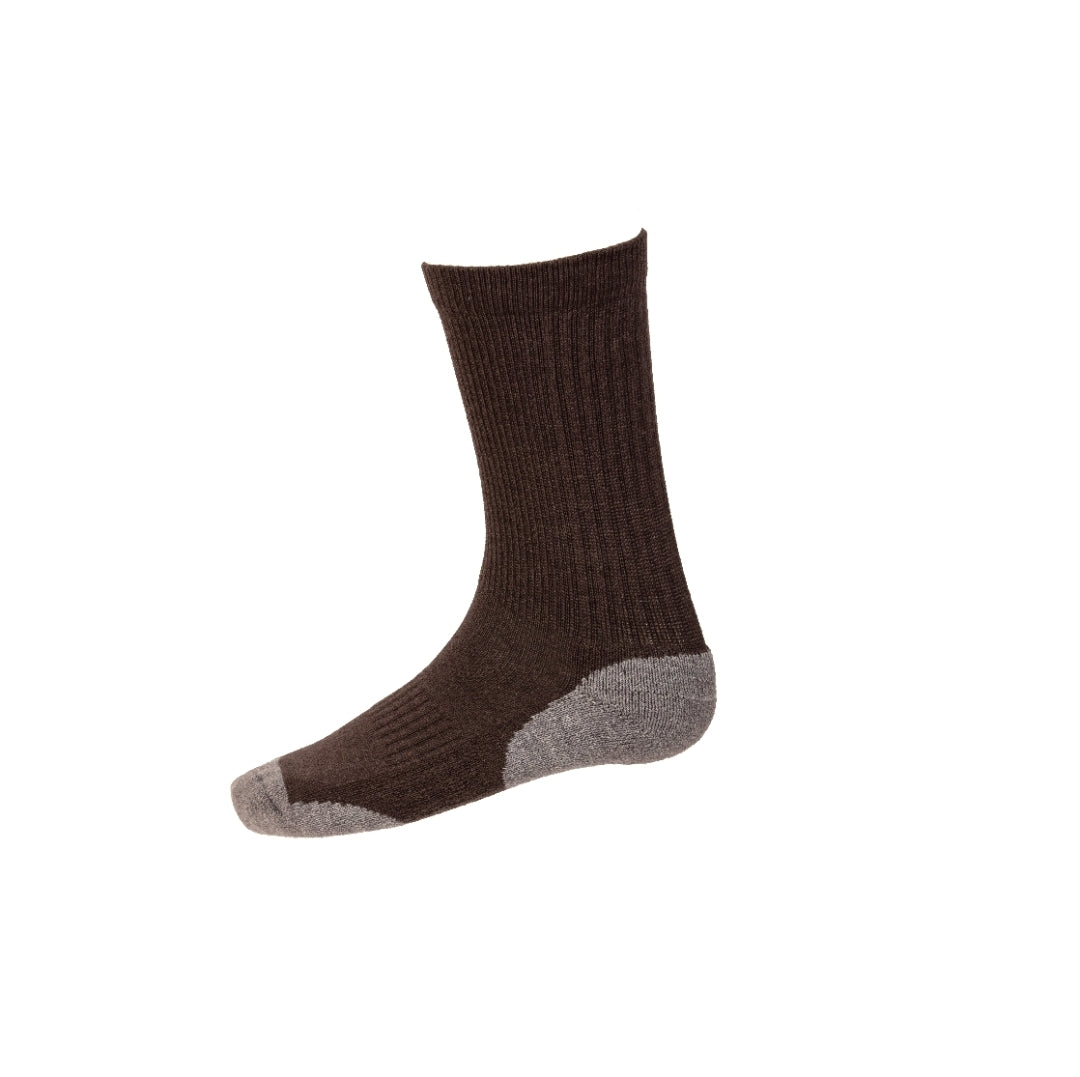
From there, the Scarba at £16.80 is the value choice for country walking, while the Tayside in Spruce at £40.80 suits shooting and fishing days that demand warmth.
Choosing the right sock is the difference between a boot you forget about and one you're desperate to take off. At Field & Moor, we pair our handcrafted, waterproof boots with House of Cheviot socks knitted in the Scottish borders, so your feet get the same attention as your footwear. Our boots feature Goodyear and storm-welted construction, Sympatex waterproof linings and Vibram soles, and our House of Cheviot socks are designed with cushioned comfort in mind. Get started with Field & Moor and build a sock collection that performs as hard as your boots.
Frequently Asked Questions
What socks are best for hiking boots?
Merino wool blend socks are the strongest choice for hiking boots. A blend of around 85% merino wool with nylon and Lycra gives warmth, breathability and shape retention without excess bulk. Cushioning under the foot reduces fatigue, while a soft cuff keeps the sock in place. The House of Cheviot Ben Trek range, knitted in the Scottish borders, is a cushioned option suited to country walking.
Should hiking socks be thick or thin?
It depends on your boot fit. Hiking sock thickness should fill the space inside the boot without pinching. Too thin and you lose cushioning and friction protection; too thick and you restrict circulation, which causes cold feet and blisters. If your boots fit closely, choose a light to mid-weight cushioned sock. If there is room for a fuller cushion, a thicker sock adds comfort on long-distance walking over rough terrain.
Are merino wool socks good for hiking?
Yes. Merino wool helps regulate temperature, so feet stay warm in cold weather and cooler in summer. Merino wool hiking socks also resist odour over multi-day trips. Look for a blend with nylon for durability and Lycra for fit. Wash at 30 degrees or below with wool-friendly detergent and dry flat to keep them performing for years.
How do I stop my feet from blistering in hiking boots?
Blisters come from friction, moisture and heat. Wear a well-fitted merino wool sock with flat seams and cushioned panels, and make sure your boots are correctly sized with no heel lift. Change socks if they become damp, and consider a thin sock liner under your main sock on long walks. Breaking boots in gradually before a big day out prevents the hot spots that turn into blisters.
